Ads used to be here |
 |
 |
 |
 |
 |
 |
 |
 |
 |
|
|

 |
|
|

| Life |
|
Art
& Culture Feng
Shui with Horoscope Almanac Mind, Body & Soul Style |
|
Tri-colored Tang Pottery
The tri-colored Tang pottery flourished during a rather short period of time (the 8th century) of the dynasty, when pottery pieces of this kind were used by the aristocracy as funerary objects. Those in existence today are limited in number and are considered to be rare treasures, valued for their brilliant color and life-like shapes. Excavated tri-colored Tang pottery are usually horses, camels, female figurines, dragon-head mugs, figurines of musicians and acrobats, and pillows. Of these, the three-colored camels have won the greatest admiration. They are presented as bearing loads of silk or carrying musicians on their backs - their heads are raised as if neighing; the red-bearded, blue-eyed drivers, clad in tunics of tight sleeves and hats with upturned brims, represent true-to-life images of men from Central Asia of that time, as they trudged along the Silk Road to the tinkle of camel bells. Replicas are being produced today, and are valued for their art form, resemblance to the authentic works and historical significance. - by Frank Jang, Asian art and furniture historian and importer Shopping! View items from AsianConnections Collection!
|
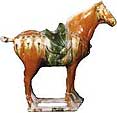 The tri-colored
glazed pottery of the Tang Dynasty was developed 1,300 years ago.
This art form drew on the skills of Chinese painting and sculpture
and employed techniques of clay-strip forming and incising. The
lines produced from this process were rugged and powerful. Glazes
of different colors were painted on and while chemical reactions
took place in the process of firing in the kiln, they dripped naturally
so that the colors mingled with each other and formed smooth tones.
The tri-colored
glazed pottery of the Tang Dynasty was developed 1,300 years ago.
This art form drew on the skills of Chinese painting and sculpture
and employed techniques of clay-strip forming and incising. The
lines produced from this process were rugged and powerful. Glazes
of different colors were painted on and while chemical reactions
took place in the process of firing in the kiln, they dripped naturally
so that the colors mingled with each other and formed smooth tones.
 |
|||
|
 |
|
|
| | About Us | Disclaimers and Legal Information | Advertise With Us | We welcome your comments. Send e-mail to us at info@asianconnections.com Copyright ©1999-2002 AsianConnections.com |