"Yum
Cha"
"Yum Cha"
is the Chinese invitation to "go eat dim sum or have a cup of tea."
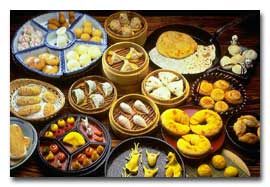 In Southern China since the 10th century, teahouses have
been an important place for family, friends, and business associates
to meet and partake of dim sum.
In Southern China since the 10th century, teahouses have
been an important place for family, friends, and business associates
to meet and partake of dim sum.
Dim Sum literally means point (dim) to the heart (sum) or
"touches the heart" because you point to and choose the dish you
want. There is no menu. The dozens of small morsels, sweet-filled
pastries, and breads have been popular fare in Chinatowns throughout
North America and other parts of the world since their introduction
in the 1800s.
If you have never experienced the pleasures of a dim sum
lunch, it is better to go the first time with someone who is familiar
with the selections. Dim sum comes three ways: fried dumplings,
steamed buns or dumplings, and those prepared by stir-frying with
sweetened black, red, or lotus bean paste. Dim sum is served from
carts filled with plates and little bamboo steamers, each holding
three pastries (three is considered a lucky number by Chinese).
Choose as many different dishes as you wish; at the end of the meal,
the bill is calculated by the number of empty dishes on the table.
Nobody really knows the origin of dim sum. It started out
as special gifts to exchange with friends during festive occasions,
such as Chinese New Year, Dragon Boat Festival, and August Moon.
It was the Cantonese, during the Sung dynasty, who began preparing
dim sum for the teahouses. These tidbits became so popular that
Cantonese teahouses throughout China built reputation around a core
of dim sum dishes that have become classics.
Today, chefs are creating new dim sum dishes because of the
vast array of ingredients and kitchen tools available to them. When
going to Chinatown for dim sum, remember that it is generally served
between nine in the morning till two in the afternoon (9am-2pm).
|