Ads used to be here |
 |
 |
 |
 |
 |
 |
 |
 |
 |
|
|

|
Drink Tea "Tea�it
clears the palate, aids in digestion,
The preparation of tea underwent a number of changes over the centuries. The original method, as proposed by Lu Yu in his classic work Cha Ching (AD 780), was to boil tea leaves that had been pressed into cakes or bricks. The more Buddhist-oriented Sung beat powdered tea into hot water to create a froth. It wasn't until the early Ming dynasty (AD 1368-1644) that loose tea leaves were steeped in a pot or cup. Tea grows abundantly all over China, and is generally categorized into three types: unfermented, fermented, and semi-fermented. Unfermented tea, or green tea, is sun-dried and roasted immediately after picking. The refreshing, delicate flavor of green tea is most often enjoyed in such teas as Dragon Well (lung Ching), Gunpowder, Lu An, Chrysanthemum (scented with Chrysanthemum blossoms), and the ever-popular Jasmine (also made with an Oolong base). Fermented tea, or black tea, named for its black leaves (called red tea by Chinese for the red color the leaves impart), is full-bodied due to the fermentation of the leaves before roasting. Some of the black teas include Keemun, perhaps the most famous tea and the precursor to English Breakfast tea; Lapsang Souchong, a smoky-flavored tea; and Lychee (scented with the lychee fruit). The semi-fermented tea capture the best characteristics of both the green and black teas. Oolong (Black Dragon) is the most popular in China and abroad. Ti Kuan Yin (Iron Goddess of Mercy) from the Fujian province also falls into this category. According to Chinese history, the use of the tea pot was not introduced until the Ming dynasty. Traditionally, the same pot is used over and over again for each type of tea. Pots are never washed, only rinsed, so as to retain the tea's flavor. Very old pots are said to have so much flavor that tea can be made in them without any leaves. The finest Chinese tea sets and pots are small, delicate, and exquisitely detailed works of art collected by many. To brew tea at home, here are some tips to follow: Tea should be brewed in earthenware, porcelain, or glass, and never in metal pots. First, rinse the pot with boiling water to heat it. Pour out the water and add one teaspoon of tea leaves per measuring cup of water. The water for the tea should be heated to just below boiling and poured over the tea leaves rather than adding the leaves to the hot water. Allow the tea to steep 3 to 5 minutes before serving. These same leaves can be used for a second pot of tea by simply adding more hot water. Tea clears the palate, aids in digestion, soothes, uplifts, and refreshes. It is the one beverage you can't go wrong with when serving the flavors of China.
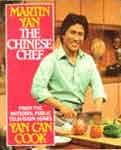
Buy this book and other cookbooks from Martin's official online store and Martin will send it to you autographed!
|
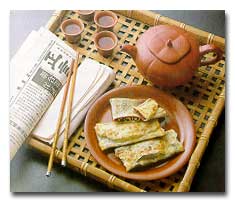 Some 2000 years after the advent of wine, the delights of drinking
tea (cha) were introduced in China during the Tang dynasty (AD 618-907).
However, tea had been mentioned under a different name in Chinese
literature as early as the Three Kingdoms (AD 220-265). But we mostly
see its growth in popularity during the Sung (AD 960-1206) and the
Mongol Yuan (AD 1271-1368) dynasties. An historical oddity is that
Marco Polo never wrote about tea during his visit to China in 1275.
So it is assumed that the Mongol leader Kublai Khan did not drink
tea. Thus it took another 325 years for tea to reach Europe.
Some 2000 years after the advent of wine, the delights of drinking
tea (cha) were introduced in China during the Tang dynasty (AD 618-907).
However, tea had been mentioned under a different name in Chinese
literature as early as the Three Kingdoms (AD 220-265). But we mostly
see its growth in popularity during the Sung (AD 960-1206) and the
Mongol Yuan (AD 1271-1368) dynasties. An historical oddity is that
Marco Polo never wrote about tea during his visit to China in 1275.
So it is assumed that the Mongol leader Kublai Khan did not drink
tea. Thus it took another 325 years for tea to reach Europe.
 |
|||
|
 |
|
|
| | About Us | Disclaimers and Legal Information | Advertise With Us | We welcome your comments. Send e-mail to us at info@asianconnections.com Copyright ©1999-2002 AsianConnections.com |