|
| |
|

| |||||||||||||||||||||||||||||||||||||||||||||||||||||||||||||||
|
|
|
|||||||||||||||||||||||||||||||||||||||||||||||||||||||||||||
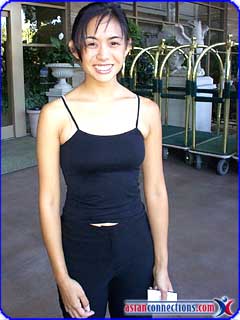
Marie Matiko Actress Marie Matiko walks into the room, and within moments you are quickly engaged in a conversation that is both intelligent and captivating. Throughout the conversation, Matiko speaks with a kind of exuberant joy and refreshing outlook that is reserved for someone who has just won one of the biggest roles of her career.
Matiko has earned her credits the old-fashioned way with years of hard-work training first as a musician, dancer, singer and now as an actor. The interview is filled with Matiko's laughter, and like a good improv actor, at times she uses her whole body to express her thoughts just by changing the position she's sitting in the chair. Her enthusiasm and dedication to her craft is catching the attention of Hollywood. She portrays 'Julia,' a UN translator who joins forces with a UN spy (Snipes) to uncover an international conspiracy surrounding the assassination of a Chinese ambassador in New York City. Of her character, Matiko offers, "'Julia' has great strength, edge and humor and is an intriguing dichotomy of a highly trained professional and a smart-ass rebel. I was able to draw on my own technical background as an engineering major at UCLA and my passion for the performing arts to bring the character to life." In 1998, she appeared opposite Mark Wahlberg and Chow Yun-Fat in New Line Cinema's action-packed thriller, "The Corruptor," in which she played 'May,' the love interest of Yun-Fat's character. "They made me look absolutely beautiful in some scenes and almost unrecognizable in others," says Matiko, whose character was an indentured slave and heroin addict. Matiko also appeared last summer in Universal Pictures' "The Mystery Men" with Ben Stiller and Janeane Garofalo. She recently guest-starred on two television episodes of "Xena: Warrior Princess," in which she tackled the demanding dual role of twins, one sheer evil and one pure angel. "I'm an Asian mutt!," Matiko proudly calls her Chinese, Japanese and Filipino heritage. A native of Southern California, Matiko endured a strict cultural upbringing which ultimately fostered discipline and a deep-rooted passion for the arts where she could freely express herself. "When I was in grade school, I wanted to become a concert pianist," says Matiko, who began playing piano at just four years old. "I had always been taught to stifle my emotions, so if something upset me, I would go into my room and play an angry concerto." Matiko soon found her voice as well and started singing at fourteen when she was chosen among thousands of candidates to join a semi-professional performing arts group called Young Americans. "That was pretty much my social life throughout high school," says Matiko, who performed in variety song and dance shows. A straight "A" student, Matiko attended UCLA where she majored in environmental engineering to the delight of her parents. While still in college, however, she auditioned for the first national tour of "Miss Saigon," and her career path suddenly took a sharp detour. Landing the roles of 'Mimi/Gigi,' Matiko set about traveling the country performing on tour. "I feel like I've been training like an Olympic athlete," says Matiko, who favors the advanced technique and comprehensive style of instructor, Silvana Gallardo. Aside from acting, singing and dancing, Matiko lists among her special skills martial arts, rifle shooting and firearms -- compliments of her ROTC training at UCLA. Marie has founded a small school for the performing arts called Vivace, a musical term meaning "full of life." Every Saturday morning, she shares her love of singing and performing with her classroom of Asian-American children. Matiko concludes, "The training of a performing artist is a great foundation for life which instills courage, pride, passion and discipline," traits she hopes will inspire her young students to carry with them for the rest of their lives. © matiko.com Matiko: I'm excited! You know, it's what I've strove for. But at the same time it is a little scary, you know, I'm walking into a forest, I've never taken a path [like this] before, trying to find people to guide me to walk the path. It's been very strategic, I mean literally it's like talking the talk, talking to business people, how do I approach the business of it?�PR people, how do I approach that way, from different facets to create that combination so I can start seeing the path. Q: Can you talk about your experiences working with Wesley Snipes, and some of the more memorable scenes that you did together? Matiko: Oh, Wesley Snipes. Wesley, he was really, really cool. When we first met, it was literally my last audition. Would I get along with him or would I not. And I'd actually seen him with Maya Angelou on an Oprah Winfrey interview. And he was so cool, he was so chill, he had a great style about him. And the fact that?�he supported Maya Angelou, she is such a great writer. You know, she goes around the country speaking all year round, inspiring people. I felt that the choice that he had picked Maya?�says a lot about him. And I knew I would get along with him. And at the same time he is very artistic?�in everything that he approaches, his endeavors in life, in producing and what he chooses. He parties hard, and I know how to do the same. (Laughter) Q: Did he give you any good advice, starting out in your career? Matiko: Yeah, definitely. You know, like I said, I've been watching Wesley through the years, and there were times when, the hardest part for me was not the acting but?�dealing with all the attention, to walk into a situation, and there's 150 crew members, 300, 500 cast members, and you walk in??you feel it around you. You feel the energy's hitting you, and you are like "Okay, I'm getting a little nervous. I'm getting a little self conscious." (Laughter) And then Wesley, he's so great, he would just come up to me and just say one little sentence in my ear, and I go, "Okay, everything's fine." I mean and that's what I needed. I didn't really need the acting help or the technical help. And that's, what Wesley Snipes is??they teach us how to be a great actor, a great actress, but they don't really teach us how to handle success. And so I thought that was really wonderful, how he would help me, sort of guide me. ?�So we were dancing, I've never told anybody this story yet, but we were dancing at a club, and all of a sudden I felt the room stop, and it was like an old wild happening fun time, and everybody was sort of looking at us, and we were just dancing. And Wesley grabbed me, and he looked at me and he goes, "Just do it for yourself. Just don't have fun for anybody else. Just do it for yourself." And I was like, "Okay. Why not." I mean, why not just dance and have a good time. And so, not only was that, but that's the whole point of why I am artist anyway. Just shine through, let it happen. Just like, who gives! Some people will like it, some people won't, some people will be totally shallow and make judgments, but actually who gives! (Laughter) Q: How about doing the nude scene? Matiko: Oh, the nude scene. Well, actually I had some very strategically placed pieces of material on me, so I wasn't entirely nude. But you know, Christian talked to me before the movie, discussing how are you going to begin, and I was like, "Well, I don't really want to do it." (Laughter) But we talked, and the way they approached it was very, very respectful. You know, it wasn't like, "Oh, you can't hack it?" It was, "You know, I understand that this could be uncomfortable. How can we make it more comfortable for you?" So there weren't very many people around when it was being shot, and the people that were immediately around me were a lot of women. And then even Wesley, I feel like Wesley could have just walked on us like a diva kind of thing. But he came and talked to me, just sort of grabbed my hand and said, "Everything's going to be fine. It's not a problem." So it was cool. Q: And it's nicely done in the movie, the scene is not shot for exploitation like, "Let's see you naked!" Matiko: (Laughter) I know! Q: Which some feel that in this genre, everybody wants her to take off her top. Matiko: (Laughter) Sure. Yeah, but I have to say, it's not very sexual nor is it very sensuous, and it's just sort of very anxiety filled, and it's supposed to be a very comical moment in the movie. © matiko.com Matiko: I'm an "Asian Mutt," (laughter), so I'm Chinese, Japanese and Filipino. Q: How did you get into acting? Matiko: (laughter) I know, exactly! My friend popped in a tape in the tape deck and said, "Hey, listen to this music! It's from a musical called "Miss Saigon," it's from this Broadway musical and he goes, and there are Asians in it." I go, "Oh, okay." So I listen to the music, it was great, it was from the creators of "Les Misérables." And I said in my mind clearly, I said, "I want to be part of this!" And I found out about the auditions three months later, and three weeks before the audition I started taking voice lessons, and it was just like sort of like, I had this very clear vision and great attitude, and I got into this Broadway musical on my first audition! And then what happened was I wanted to become a great singer. And so, great singers, I realized on the road were great actors, and so I started taking acting classes. And all of a sudden, you know, in acting class, they encourage you to be as expressive as you can, well, I came from a very strict upbringing. You know, you don't talk back to your elders, you're very like disciplined, you always have a very honorable presentation, and so all of a sudden I was allowed to be different. I was allowed to cry, I was allowed to be sexy, I was allowed to be pissed off and it was all good. And literally it was sort of like *phew* I had opened myself to experiences and feelings I had never felt before. And then I saw the movie "Joy Luck Club," which is about three Asian American families, and literally it was the first time that I sobbed, like I was like, "Oh my gosh!" I kept on crying and crying during the movie (laughter), and I had never cried in a movie before?�Finally my story is being told." I go, that's me! And then I said, well maybe I can do this. Because before that it was all about just Connie Chung. You know, Connie Chung on the news, and that's all I'd ever seen, I mean really, truly, that's all I'd ever seen. So then I went back to Hollywood and I got an agent, and three months later I got that movie, "The Corruptor" with Mark Wahlberg and Chow Yun-Fat. Q: You were looking for people who could be role models for you, like Connie Chung or the "Joy Luck Club." Did you feel like an outsider in a lot of ways? Matiko: Well, yeah, I was sort of an outsider, but who in Hollywood wants to be the same as anybody else? It's really about uniqueness, and that's what art is. You know, what about me that is very particular and special that, you know, that I can show, and that if I work hard enough at my craft that I can explore so many facets of what that is. In terms of role models, Wesley [Snipes] a great person, and [Edward] James Olmos, Jennifer Lopez has actually been quite inspirational, Jimmy Smits, the hotty, you know, he's awesome?�I just sort of had to be pick and choose and be very strategic and be very intelligent about the way that I approach that. Q: What does it take to find "color blind" roles and to be an Asian actress finding a space in Hollywood? Matiko: Well it requires that you have people behind you who can have that big and open mind. I have a great manager who never thinks that way, I have a great agent who never thinks that way. So, I don't go out for roles that are like my 100th refugee role, audition, or my 80th concubine part! I don't go up for the same thing anymore. I'm very selective about what I choose to go out for and spend my time wisely with that. © matiko.com Matiko: I discussed this with Christian [Duguay], and he just felt it brought the dramatic point up a little more, it made the dramatic point a little more accessible. The fact that I still have an accent, at least, I feel like she's very highly educated, not just regular intelligence, but a really intelligent woman, and who's fluent in English and you can still understand her. So I still think to a certain point that I've crossed a bridge and I do think that it is very encouraging. Q: Now, you've mentioned that your parents are very straight-laced, and I'm wondering what they thought when you first decided to audition for a part in "Miss Saigon." Matiko: Yeah, well, when I first auditioned, I'm going to see what happens, I didn't really make a big hoopla of it and everything, and then I got the call back. The day that I went there were hundreds and hundreds and hundreds of girls, and they only took four of us from LA from the national audition, and so my mother was very excited, but I don't even know if my father knew at that point. And then when I got the role, we watched a little documentary of the making of "Miss Saigon," and my father was like, "You are not doing that, you are not doing that show!" and just stormed out, and it was very, very difficult. But then when he actually saw the production, you know, he's like, "Oh, this is really legitimate. This is not sexploitation." And as I came over to Hollywood and I've had very steady success, he's been very supportive. Now my dad is the guy who pulls out the fashion magazines and leaves them at the bed side (laughter), so that I can make sure I'm up to date with my fashion! (Laughter) Q: There had to be something else that allowed you to make that jump [into acting], because you were in college, and you were on a more secure path [to become an environmental engineer]? What really freed you up that you could say, "Okay, I'm going to just jump in and do this?" Matiko: Well, "Miss Saigon" wasn't really a huge jump for me. It was sort of this thing where, okay, I have a good education, and I'm very good. I really loved college. I did very, very well in college. That's why I was a little bit??I sort of did have a struggle. But the decision was, "I'm going to do 'Miss Saigon' for a year, get the "drug" out of my system!" And [could] come home back to college and get my degree. When I discovered acting, and I saw the "Joy Luck Club," I said, "Well, I think I can do it!" There were so few of us at the time who had experience, that I felt, okay, I may have an edge on it. And because of the discipline that I had... I studied acting very intensively. I took [classes] when I was on the road, during the day, doing the show at night??singing and dancing and acting just so I could get better at it, and, I was trying to finish my academic classes as well. And then when I got to LA, I wanted to be a film actress! And so I researched and I researched and through my research skills that I learned at UCLA (laughter), I found a great film teacher, and I've just been very, very strategic in my approach. Q: You were in the traveling musical group, "Young Americans?" Matiko: Oh yeah! Yeah, "Young Americans" was great, and founder Bill Anderson, and Milton Anderson and Bill Brawley, basically taught me "You're best when you're you." And I was like, wow, that's so great, because growing up in Huntington Beach, [California] I grew up around beach bunnies, and, to be totally realistic. You know, I grew up with a lot of racism. And so that was like the first place where I was like, "Aw." And that's why singing and dancing was sort of my window to?�finding me. Q: Were you familiar with the issues surrounding the global political storyline with China and the U.S.? Matiko: Yeah. You know, of course I've heard both sides of it. How the Americans want as much into China as China is very particular about how America approaches??the Chinese population. But I also know people who have visited China who realize, "Wow, the capitalism has already like integrated quite well into their system. So yeah, I was very familiar with it and also I had done "The Corruptor" [with Chow Yun-Fat] and I had known about the triads in New York,??and they just sort of feel like they are in an entirely different system, different ways of thinking. ?�And I feel that's what the movie?�does, what is good from the East and what is good from the West? What are the faults of those systems, and how can we integrate the two of them to create a better system. © matiko.com Matiko: No! I know. I sort of watched and envied, going "I can do that. I can do it better." (Laughter) But no, I didn't get to apply any of it. But it was really fun to be in the center of it. Q: I suppose it wouldn't have made sense that your character had known all that? Matiko: You know what, I think if I had educated them in terms of the fact that I did do martial arts, and I did do firearms training, and it was on my resume so you assumed that they would know. But it was, maybe two thirds through when I was talking to Jeff Ward, who's the stunt coordinator there, he said, "I didn't know you do martial arts." I go, "Yeah, I know two forms!" And he's like, "Had I known, I would have incorporated it." So from that point on I got to do some of my own stunts, but I didn't get to kick ass. Q: And you're a firearms expert too! Matiko: (Laughter) Being called an "expert" really cracks me up. No, I know how to use them. I was in ROTC, I was training to be a lieutenant in the military in the army, and so we would go out to Camp Pendleton, we would be there for five to seven days without ever taking a shower, and we would work with firearms, you know, dig foxholes and all that stuff. Q: Why didn't you play an Asian American in this movie? Matiko: I discussed this with Christian [Duguay], and he just felt like it sort of brought the dramatic point up a little more, it made the dramatic point a little more accessible. The fact that I still have an accent, at least it's not, I feel like she's very highly educated, not just regular intelligence, but a really intelligent woman, and who's fluent in English and you can still understand her. So I still think to a certain point that I've crossed a bridge and I do think that it is very encouraging. AC: And at your young age, you are also mentoring young children. Matiko: Yeah, a little school where I teach little Asian kids, um (laughter), every Saturday. I teach little Asian kids how to sing and dance and do performing arts, so I've sort of created a forum where these kids who are sort of like me, I sort of see me in them. It's like a hybrid of Eastern background and loving the Western culture as well. All these Asian kids like doing a Christina Aguilera and Britney Spears dance or two. It's fun! Q: Elaborate on your feelings about it being fun and rewarding about working with kids. That's a real commitment, to start a school and be there every Saturday. Matiko: What's so fun about it is that from the very beginning, I can implant this idea that you are a unique combination. And through your background and everything, you have something special to offer. And that's fun and that's something you should be proud of. Keep on talking, and keep on singing, keep on dancing and don't you ever be ashamed of it. Q: What forms of martial arts did you train in? Matiko: I studied Tae Kwon Do and I studied Karate Do. So Karate Do is much more grounded, Japanese sort of approach, and then Tae Kwon Do is very fast, and like high kicks and that kind of thing. I like both of them. I mean martial arts is so great, because it's not just like running on a treadmill, it's just so very one dimensional, martial arts is really like a mindset. It's like mind, spirit and body. All of it. It's very helpful. Q: What does it take to find "color blind" acting roles and being an Asian actress finding a space in Hollywood? Matiko: Well, it requires that you have people behind you who can have that big, open mind. I have a great manager [that} thinks that way, I have a great agent [that] thinks that way. So, I don't go out for roles that are my 100th refugee audition, or my 80th concubine role. I don't go up for the same thing anymore. I'm very selective about what I choose to go out for and spend my time wisely with that. Q: A lot of actresses look to directing or producing as a means to extend their career, would you see that in the future? I don't see myself as a director, but I do feel that I know how to spot talent and I can see a good person when I see them. Not only are they good talent-wise, but a good person. So I do feel in years to come that I could start bringing stories that I feel I want to have expressed. Not necessarily in the Asian American?�Wesley has a whole production company that makes documentaries about significant African Americans?�So maybe there's a parallel, maybe I can just create stories that are truly "color blind" that have real social significance. Q: What kinds of roles are you interested in doing for the future? More than anything, I'd like to always be in roles where you've never seen my package do a certain thing. I'm not even looking for specific heroic roles. But in a crazy psycho role where you've never seen someone that looks like me do that. It will open the minds of everybody. Two independents coming up. I'm being very selective about what I see. I'm a real script snob. I want to make sure that anything I am associated with, that I am proud of. I don't want to disclose [yet] because I don't know how the scripts will change. I'd love to do straight singing in its pure form, and straight acting in its pure form. I really love the film medium, if you think something, I can see it. I can look into your eyes and I can see it. In stage, its all about creating something very, very?? and I don't thing it's as truthful as film. And singing, it's about the purity of sound?�and it doesn't have to be with words?�it's literally the sound. When sound hits you in music, waves crashing. It totally penetrates all of your body and evokes and emotion that is very pure.
Q: What do you do for work-out? Matiko: I dance, when I can. My boyfriend and I learned how to snowboard this season. So we like to do fun and adventurous things. I like to go hiking a lot. I swim. I swim a lot. Through my dancing, I started to develop some back problems, so I swim, swim, swim, swim, swim?�and I like to take dance classes. Do I have a daily workout? Yes, but I sort of switched?�now I'm doing a lot of kickboxing with people who really know martial arts so I practice my forms when I'm in there. Q: What do you for yourself to feel beautiful? Matiko: I really always go back to my art. I go to acting class every week. Twice a week if I can. ?�its about what do I want to create in the world?�and to be idealistic?�It's not an easy road, for anybody. So what is it that you want to stand up for and create in the world? So, yeah, I totally could have taken a safe path and gone into engineering. Easy money. [laughter] Mom and Dad would have been "killer - happy!" But this is what makes me happy. And I think this is what I want to do. Q: Thank you. Matiko: Thank you! - End of Excerpts - There's more!
| |||||||||||||||||||||||||||||||||||||||||||||||||||||||||||||||
| |||||||||||||||||||||||||||||||||||||||||||||||||||||||||||||||