|
|
|
|
Community Global Villages
|
|
||||||||||||||||||||||||||||||||||
|
|
|
||||||||||||||||||||||||||||||||
|
(continued) Community and Industry Controversy In the spring and summer of 1970, after President Nixon had approved the invasion of Cambodia and the nation looked toward another long, hot summer of unrest in the ghettos, Chinese for Affirmative Action (which had been formed by Alice Barkley, Buddy Choy, L. Ling-chi Wang, and George Woo) released a study that showed Bay Area broadcasters were virtually "lily-white" in their hiring and employment practices, with only Belva Davis, Mel Knox, Mike Mills, and Ben Williams on the air, and Al Caldron, George Chong, Loni Ding, Willie Kee, Gimmy Park Li, Sam Lopez, George Lum, Bill Moore, Howard Yuen, and a few other non-Caucasians behind the scenes.
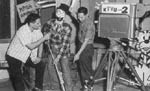
George Lum put his job on the line at KTVU. He helped to organize the community around the issue of hiring and sent a pointed letter to the East-West Chinese American newspaper, questioning the local stations' sincerity in eliminating discrimination in their hiring practices (July 15, 1970): "KRON and KCBS denied that they have in any way discriminated against hiring Chinese Americans?Mr. Jim Simon of KCBS was quoted in the Chronicle article as saying he 'has actively tried to recruit a Chinese American broadcaster' and he speaks of one in Phoenix. I know whom he speaks, for this young Chinese, Mr. Sam Chu Lin, called upon me a few years ago? The "gist of what I told him was that even as cosmopolitan as the San Francisco Bay Area seems to be, no radio or television station is going to hire an Oriental for on-the-air in Phoenix. Sam has now been quite successful on CBS radio feeds and on KOOL-TV on-air work in Phoenix. For your information, Mr. Simon and Mr. See [KRON], only a couple of months ago I spoke to Sam Chu Lin in regard to the news personnel changes here at KTVU, and I know that a phone call from either of you would bring him running. "The phrase 'Equal Opportunity Employer' used by Mr. See and Mr. Simon are nice words to hear, but for the Chinese American, it still means behind the scenes work in broadcasting. One picture would truly be worth a thousand of your words." The battle was joined, to open up the public's airwaves. The Chinese and other ethnic American communities began to pressure the stations to adhere to new federal equal opportunity guidelines. There was added pressure from the government because the stations' licenses to broadcast and operate were up for renewal before the Federal Communications Commission. They also had to show they were serving the interests of the community in their programming.
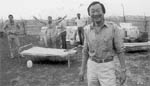
Christopher Chow quickly established himself as a capable, insightful reporter, distinguished for his writing and his enterprising investigations into Chinatown youth gangs, land reforms and California agribusiness, and other social issues. When he let his hair grow long he tested the industry's tolerance for diversity and its limits of non-conformity. By the age of twenty-two he had earned the Northern California Associated Press Award of Merit for his Chinatown documentary. The next year he became the first Asian American reporter to win a local Emmy Award for Best Documentary. His work established the credibility of Asian Americans as on-air reporters in the San Francisco Bay Area.
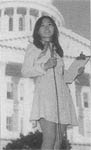
The stations wanted on-air personalities fully formed. KGO brought in David Louie from ABC Chicago. Suzanne Joe was supposedly "lured away" from Oakland's KTVU by KRON. In actuality, she had assiduously positioned herself to be in the right place at the right time by banging on doors and taking "token" positions at KCBS radio, KGO-TV, and KTVU-TV. When KRON went looking for a token, Suzanne Joe was ready, willing, and able when the call came. She proved herself with two Emmy nominations and coverage of major stories like the Patty Hearst kidnapping and the attempted assassination of President Ford.
|
||||||||||||||||||||||||||||||||||
|
|
||||||||||||||||||||||||||||||||||