|
|
||
|

|
|||||||||||||||||||||||||||||||||
|
|
|
|||||||||||||||||||||||||||||||
|
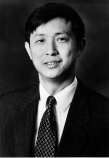
AC will interview medical pioneers and carry reports on the status of groundbreaking medical research. S.K.: Dr. Hui, you are trained in modern medicine and science as an internist, clinical pharmacologist, and geriatrician with extensive experience in research, education and clinical practice. What prompted you to become interested in Traditional Chinese Medicine and why did you decide five years ago to establish the Center for East-West Medicine as part of the UCLA Medical Enterprise, the best medical system in the Western part of the United States? KKH.: My interest in TCM started during my childhood in Hong Kong when my parents would take me to a Chinese herbalist when my medical problems were not responsive to
Western medicine. I knew then that different healing traditions have strengths and weaknesses, each working better in certain situations. In 1992, when the late President
Nixon paid his visit to China and the world became fascinated by acupuncture, I made up my mind as a young medical student at UCLA that my future goal in life will be developing
a new paradigm of health care which is based on the foundation of the best of TCM and Western medicine with a focus on health promotion, prevention, increased quality of life
and vitality. Five years ago, when my understanding of both Western medicine and TCM had reached a critical level and with the opportune time, place and manpower, I founded
the Center for East-West Medicine at UCLA with the explicit goals to: Establish the theoretical and scientific construct for a new model of medicine based on findings from
the latest scientific research by integrating Western and traditional Asian medical paradigms; Develop a model system of comprehensive care with an emphasis on health
promotion, disease prevention, treatment and rehabilitation through an integrated practice of East-West medicine and Asian medicine both at UCLA and at academic institutions
around the world. Educate the public to a greater awareness, stimulating interest and collaboration on issues relating to TCM and integrative East-West medicine. S.K.: Dr. Hui, would you please tell us about your opinion on TCM and how does it differ from modern medicine? KKH.: TCM is a comprehensive medical system developed as a result of continuous process of extensive clinical observation, testing and critical thinking by countless physicians, patients and theoreticians. It has been in continuing refinement by physicians and the Chinese people for several millennia. TCM, which is based more on the systems-approach, places strong emphasis on the integrity of the human mind/body and its dynamic interaction with the natural and social environments. It recognizes the importance of physical, nutritional, psychological and spiritual factors on health. TCM operates with the notion of the body as a dynamic open system, emphasizing function over structure as well as the importance of balance, flow and a requisite amount of energy to maintain the blood flow. The focus is on health promotion and preventive care at every stage of the patient's illness. Instead of placing emphasis on identifying specific diseases states, TCM aims to discern patterns of disharmony and imbalance in the patient. These states, constantly in flux, require meticulous adjustment of an individualized therapeutic regimen, including the choice of acupuncture points for stimulation, herbal and diet remedies as well as physical and mental exercises to activated the body's homeostatic (self healing) mechanisms. TCM concepts and techniques have been applied to treat a wide spectrum of diseases such as cancer and vascular diseases as well as other common illnesses such as infections and pain. S.K.: What is the advantage of incorporating some of the concepts and techniques of TCM in the modern health care system? KKH.: In general, Western medicine is more focused on disease at the micro level, whereas the forte of TCM, more patient based, focuses on the macro and infrastructure level and emphasizes life/health cultivation techniques as well as on disease prevention, treatment and rehabilitation. Hence, modern medicine, which is largely modeled on acute disease, has stunning success in confronting acute injuries and infections and in the prolongation of life (with varying degrees of quality) with potent drugs, surgeries, dialysis, prosthetic devices and organ transplantation. However, with the rise of chronic illnesses associated with the graying of society and the increasing number of people saved from acute crisis, the current health care system is less able to meet the society's needs because of the complex and multi-systemic nature of these illnesses. It is fortunate that the systems-approach of TCM is more suited for the latter. Hence the two systems are complementary with the strength of one compensating for the weakness of the other. S.K.: Dr. Hui, in the future would you share with us your insights and experiences from your many difficult cases at the UCLA Center for East-West Medicine. KKH.: I would be happy to. Since by now, most of you probably have already developed a tight and sore neck. I would like to share with you in future editions of AsianConnections techniques that our Clinic often teaches our patients for the relief of neck spasm, which often leads to neck pain, headache and other symptoms involving the eyes, ears, and nose.
|
|||||||||||||||||||||||||||||||||
|
|
|||||||||||||||||||||||||||||||||