 |
|
|
|
Community Global Villages
|
|
||||||||||||||||||||||||||||||||||
|
|
|
||||||||||||||||||||||||||||||||
|
April
21, 2001 Saturday Honoree
Biographies Aerospace
to Cyberspace Pioneer
Dedicated scientist, astute businessman, community-minded activist, promoter of political and social causes for Asian Americans, committed family man - all of these titles could easily fall under Kenneth Fong, for he is a busy man who wears many hats. The founder and former CEO of CLONTECH Laboratories, Inc. retired last year from leading this biotechnology company since its inception in 1984. Kenneth Fong is a San Francisco State University graduate who earned his BA in 1971 in Biology with a concentration in Genetics. He continued to earn a PhD in Molecular Biology and Microbiology from Indiana University. In 1998, he was placed on San Francisco State University's Alumni Hall of Fame. Under Fong�s leadership, CLONTECH, which produces and markets products to academic and pharmaceutical laboratories in the United States and thirty other countries, grew to four hundred employees, including sixty-five PhD scientists. CLONTECH�s unique products enable scientists to discover and analyze human genes. It is estimated that more than 20% of all human genes are discovered and analyzed using CLONTECH�s innovative products. It is now the largest biotechnology company of its kind in the United States founded by an Asian American. Fong proudly recalls that in 1990, CLONTECH was selected by Inc. Magazine as one of the five hundred fastest growing, privately held companies in the United States. Subsequently in 1994, 1995, 1998 and 1999, it was named by San Francisco and San Jose business journals as one of the one hundred fastest-growing private companies in the Bay Area. In August 1999, CLONTECH merged with Becton Dickinson (BD). During his tenure with CLONTECH and ever since, Fong has never been known to sit still. Although technically retired and living in Atherton, California with his wife Pamela, and children John and Maggie, he seems busier than ever with a variety of worldwide board posts and community activities. Overseas, Fong is one of a three-member Biotech Study Group for the Innovation and Technology Commission of the Hong Kong Government, as well as an Advisory Board member for both the Developmental Center for Biotechnology (DCB) in Taiwan and the Biochip Center of Tsing Hua University in Beijing. Domestically, Fong is on the Planning Advisory Board of Graduate Programs at the University of Pacific, Chairman of the long-range Planning Committee for the Society of Chinese Bioscientists (SCBA) that has 2,500 active members, and a member of the Committee of 100, a group of prominent Chinese Americans in the United States. He is also a board associate for the Whitehead Biomedical Institute at MIT. Regarding his career, Fong feels greatest pride in knowing that his company�s products have contributed to biotech and medical research. He feels that being a leader in providing innovative products is a very satisfying experience for any scientist. It is noted that some of the current genomic areas of the biotechnology field could be a continuation of CLONTECH'S early discoveries. Fully committed to the community, Fong is often called a nice guy with compassion. As his wife explained, he likes to be a part of things that have an impact on others, to create something that will leave a legacy for future generations. In 2000, the Fongs established the Fong Optometry and Medical Library at the School of Optometry at University of California, Berkeley. He was one of the founders of 80/20, a political organization dedicated to winning equal opportunity for Asian Americans, in addition to being a founder of the Chinese American CEOs of Silicon Valley, a not-for-profit lobby organization dedicated to effecting new legislation, issue tracking, and elections in Sacramento and Washington, DC. Also in 2000, Fong became Chairman of Kenson Ventures LLC in Menlo Park, California. Not only does Fong sit on the board of twelve biotech companies, in "rare spare moments" he enjoys an occasional golf game, spends time at Tahoe enjoying the snow with his family, and mentors young scientists, who probably like he, want to follow their dreams to discover new horizons in science. Always putting his time and efforts towards a positive future for the community, Fong has been a leading supporter of CHSA's own dream for a museum of Chinese American history. Aerospace
to Cyberspace Pioneer
At a time when most men are looking forward to retiring on social security, David Lee is still enjoying being CEO of three companies: eOn Communications in Atlanta, Cidco Communications in Memphis, and Cortelco in Mountain View, California. With a glint in his eye and a happy smile, he admits he still is having fun working with young people and enjoys the challenge of building a business into something of which he can be proud. A true indication of his enjoyment in working with the budding generation of high tech professionals is his involvement in ten other companies. Born in Beijing, China, where he lived until he was thirteen, Lee moved from one side of the globe to the other. With the onset of the Communist takeover of China, Lee's father, who was in charge of Beijing's transportation systems, moved his family first to Korea, then Hong Kong, Taiwan, and finally Argentina. In 1956, at his father's urging to take up engineering, Lee chose to pursue an ME (mechanical engineering) degree because-he laughs when recalling why-he thought it was the closest in spelling to something he liked, which was math. He had no idea what the subject entailed, and in retrospect, admits he should have studied electrical engineering instead. With $600 in his pocket, Lee came to the United States on a student visa, earning his BS at Montana State University, MS at North Dakota State, and his PhD at Ohio State. Throughout his academic years, this proud, diligent young student supported himself through school working at such odd jobs as fighting fires in the Forest Service, hauling in a lumberyard, and working in the dorm kitchens for free room and board. Lee recalls that in those days, foreign students stayed in college to get many degrees for fear of losing their student visas and being deported. The thought never occurred to him to ask his father for support. Lee knew he could survive on his own while his family remained in Argentina. Following a work stint with NCR in Ohio, the young Lee went to California in search of new work challenges and admittedly to meet a nice Chinese girl, who ultimately became his wife, Cecilia. The Lee family has since grown to include son Eric, a TJ Crew product manager; Gloria, a corporate lawyer; and Randy, a business development manager for IAsiaWork. At Diablo Systems, Lee was Manager of Printer Engineering where he led the team that perfected the daisywheel printer. He ultimately co-founded Qume Corporation in 1973, and served as Executive Vice President until it was acquired by ITT Corporation in 1978. Following the acquisition, he held the positions of Executive Vice President of ITT Qume until 1981, and was President through 1983. For the next two years, Lee served as a Vice President of ITT, and as Group Executive and Chairman of its Business Information Systems Group. In 1985, he became President Chairman of Data Technology Corporation. In1988, DTC bought Qume and merged both companies. In looking back, Lee�s proudest achievement was building Qume from his simple idea of the daisywheel to its becoming the largest printer company in the world. His daisywheel was used in typewriters and word processors worldwide. He recalls that even IBM bought from them in the beginning. Seeing the evolution of an idea to its successful realization and then its ultimate rise in the marketplace to the top is an achievement one will never forgets, he admits proudly. Lee has received numerous awards for his contributions not only to high technology but to local communities. He has received the Asian/Pacific American Heritage Award from President Bush in 1992, the Harvard Business School Association of Northern California's Business Entrepreneur Award, and the Albert Einstein Technology Medal for Entrepreneurship, for which he went to Israel to receive. Holding an Honorary Doctorate of Engineering from Montana State University, Lee is currently a Regent of the University of California. Lee also serves on the Board of Directors for the following business-related ventures: ACT Manufacturing Inc., ESS Technology Inc., Linear Technology Corporation, Accela Inc., Daily Wellness Co., Telmax Communications, and the Pacific International Center for High Technology Research. He was advisor to both Presidents Bush and Clinton through the Advisory Committee on Trade Policy and Negotiation, and additionally to Governor Pete Wilson through the California Economic Development Corporation (CalEDC). He
was a founder and chairman of such Asian American organizations
as the Chinese Institute of Engineers, the Asian American Manufacturer's
Association, and the Monte Jade Science and Technology Association.
Aerospace
to Cyberspace Pioneer
Regarded by fellow scientists and engineers as a world-class scholar in wireless communications, William C.Y. Lee is renowned for his leading contributions in making analog and CDMA technologies commercially viable. His present role in the industry is serving as Chairman of LinkAir Communications, Inc., the developer of LAS-CDMA-a new patented technology for wireless telecom systems that significantly increases network capacity by up to twenty times 2G system standards and improves quality of service and network coverage. In his position with LinkAir, Lee will provide strategic direction to LinkAir's senior management team. His many years of telecommunications and business experience will be invaluable as LinkAir works to ensure that LAS-CDMA becomes the new standard for the 3G (third generation) and 4G (fourth generation) wireless industries. Lee himself was a pioneer in the design and development of the first generation cellular system. Born in London, England, Lee grew up in China but moved to Taiwan in his high school and college years. He was an active child growing up. He recalls his life was sports and more sports. Among his sports repertoire, he loved track, sprinting, high jump decathlon, basketball, soccer, and volleyball. He continued his love for volleyball when working at Bell Labs, playing volleyball everyday during lunchtime with his associates. As Dr. Lee was always interested in science, he and his family felt there were more opportunities in America to advance in this field. Thus in 1958, he went to Ohio State University, earning a Masters and PhD degree there. Major influences during his student years were Professor C.H. Walters and Dr. Leon Peters who gave him guidance and direction to finish his PhD dissertation. Looking back over his career, Lee feels lucky to have been in the right place at the right time for the right person. For fifteen years, Lee was one of a team of pioneers in developing advanced wireless technology-AMPS-for Bell Labs. He then joined the ITT Defense Communications Division, where he headed the advanced mobile communications system. During his subsequent tenure with Vodafone Airtouch-one of the largest wireless cameras in the world providing service to nearly fifty million subscribers-Lee assisted in CDMA research and the initial trial of the technology. Noted pioneer in personal communications network (PCN) technology, Lee led PacTel's PCS experimental trial, and under his leadership, the first DMA phone call was completed in Los Angeles in 1995. Lee is a leader among leaders in the high tech world of Silicon Valley. He has published more than two hundred articles and four technical books on CDMA theory and technology. His latest book, Lee's Essentials of Wireless Communications, was released by McGraw-Hill in November of 2000. An undisputed expert in developing marketable communications technologies, Lee is the inventor of Microcell, a leading technology that increases frequency reuse factors and boosts capacity by 250%. He holds more than twenty-five US patents, with eleven more pending. Serving on the California State Council on Science and Technology, the US Council on Competitiveness, and the FCC Technical Advisory Council, Lee has earned many prestigious industry awards, including the IEEE VT Avant Garde Award, the CTIA Award, the CDMA Industry Achievement Award, and most recently the IEEE Third Millennium Medal Award. Lee
and wife Margaret are the proud parents of two daughters: Betty
Lee, a physician in Los Angeles and Lily Lee, a physician in St.
Louis, Missouri. Although his special interests remain in science
and technology first and foremost, he admits to hobbies of jogging,
chess, reading, and writing.
Aerospace
to Cyberspace Pioneer
Don F. Tang was born in Phoenix, Arizona as the middle son of Chinese immigrants. He learned his work ethic at an early age helping in his parents' grocery store. He recalls that because of the World War II labor shortage, he learned as a young boy to cut meat at the store, and that it was not unusual for him to work more than fifty hours weekly while attending high school and junior college. He even used his meat cutting experience to help support himself through the University of Arizona to earn a Bachelor of Science degree in Electrical Engineering in 1959. Moving to California with wife Rose, Tang worked for Link Aviation and in 1961, began his career at Lockheed Missiles and Space Company in Sunnyvale, California as a Test Engineer, testing Agena upper stage rockets and satellites. During his Lockheed tenure, he progressed through technical and management positions, and was promoted to Vice President of Operations for the Space Systems Division in 1986. In 1981, he attended Columbia University's Executive Program in the Graduate School of Business. During the years when few Asian Americans broke through the corporate glass ceilings, Tang was promoted to Vice President and Assistant General Manager of Lockheed's Space Systems Division in 1988. Four years later, he became President and General Manager of the SSD and was elected a Corporate Vice President of the Lockheed Corporation, positions he maintained until his retirement in 1995. As president, he managed a division of seventeen thousand employees with sales in excess of two billion dollars per year. It was quite a feat for the young man whose only talent was cutting meat to support himself through college, but who knew the value of hard work and diligence in whatever he attempted. Although Tang helped develop a number of classified national intelligence satellite programs, little was said about his contributions to these programs due to national security. This was partially rectified on August 18, 2000, when the National Reconnaissance Office (NRO) honored Tang and other pioneers by inducting them into the National Reconnaissance Office Pioneer Hall for making significant and lasting contributions to the discipline of National Reconnaissance. Despite a busy schedule, Tang found time to serve his alma mater by serving on the University of Arizona�s College of Engineering Advisory Board. He also served as a director for Space Week, a nonprofit organization, and on the boards of Iridium Incorporated and Telstra Inc. Lockheed's Space Systems Division developed joint venture relationships with the latter two companies during Tang�s leadership years. In
his retirement career, Tang enjoys being a caring grandfather to
two young granddaughters, Kathryn and Lauren, in his Saratoga home,
along with wife Rose. Worldwide travel and a golf game with friends
are some of life pleasures in this relaxing time of his life.
Aerospace
to Cyberspace Pioneer Yahoo! Inc. In April 1994, David Filo and Jerry Yang co-created the Yahoo! Internet navigational guide and in April 1995, co-founded Yahoo! Inc. Yahoo! Inc. is a global internet communications, commerce, and media company that offers a comprehensive branded network of services to more than 180 million individuals each month worldwide. As the first online navigational guide to the web, www.yahoo.com is the leading guide in terms of traffic, advertising, household, and business user reach. Yahoo! is the most recognized and valuable internet brand globally, and is ranked the No. 38 leading consumer brand worldwide. The company also provides online business and enterprise services designed to enhance the productivity and web presence of Yahoo!'s clients. These services include Corporate Yahoo!, a popular customized enterprise portal solution; audio and video streaming; store hosting and management; and website tools and services. The company's global web network includes 24 world properties. Yahoo! has offices in Europe, the Asia Pacific, Latin America, Canada, and the United States, and is headquartered in Santa Clara, California. Co-founders Filo and Yang are PhD candidates in Stanford University�s Electrical Engineering Department. The name Yahoo! is supposed to stand for "Yet Another Hierarchical Officious Oracle," but Filo and Yang insist they selected the name because they considered themselves yahoos. Yahoo! first resided on Yang's student workstation, "akebono," while the search engine was lodged on Filo's computer, "konishiki." The machines were named after legendary Hawaiian sumo wrestlers. Yang
is a Taiwanese native who was raised in San Jose, California. He
holds BS and MS degrees in electrical engineering from Stanford
University. Yang serves as an executive officer and is on the board
of directors for Yahoo! Inc. He also holds board positions on Cisco
Systems, Ziff Davis, Inc., and Yahoo! Japan, as well as the Asian
Pacific American Community Fund, a not-for-profit organization based
in San Francisco. Aerospace
to Cyberspace Pioneer
Although Albert Y.C. Yu confesses that one of his secret childhood ambitions was to be a conductor of a symphony orchestra, if he were given the option today of following any career path he wanted, he says he probably would opt to be an electrical engineer and manager again. Obviously, Yu chose the right calling for he has been a leader of the semiconductor industry for over the past three decades. He is currently Senior Vice President of Intel Corporation and General Manager of Optoelectronics, and is responsible for leading Intel's new business activities in optoelectronics. Born in Shanghai, China, Yu was the only child of a chemical engineer and a banker. In 1948, when his father was to set up a sales office for his company in a two-year post, he moved with the family to Taiwan. However, with the Communist takeover of China the following year, the family remained in Taiwan for twelve years before moving to Hong Kong and the United States. When asked why he chose an engineering career, Yu recalls when his mother wanted to steer him to medicine, he decided he did not like blood or the hospital environment. He was fascinated by how radio worked; his early hobby was putting together a high fidelity sound system. These interests led him to choose electrical engineering. He eventually pursued his Bachelor of Science degree in engineering from the California Institute of Technology, the Harvard of the West, and continued to receive his MS and PhD from Stanford University. Yu started his semiconductor career at Fairchild Semiconductor and was involved with the early development of silicon integrated circuits. He joined Intel in 1972 and has held a number of senior management positions with increasing responsibilities in the areas of manufacturing to general management. Since 1984, he has led the development of seven generations of leading edge microprocessor chips, the "Intel inside" of the most personal computers in the world. Under his leadership, Intel became the largest semiconductor company with six generations of the highest volume microprocessors from 386 to the latest Pentium 4 processor. A typical father, Yu speaks proudly of his married daughter, Audrey, who is in graduate studies in veterinary medicine at Cornell University. He is equally proud of his son, Larry, who is a public relations manager at Cisco Systems. In his spare time, Yu enjoys a weekend tennis game, and traveling with his wife, Mary Bechmann. A memorable time for him was an around-the-world honeymoon trip they took during an eight-week sabbatical leave Intel gave him four years ago. Yu has published over twenty-seven technical publications and in 1995, authored a book entitled Insider's View of Intel, which was translated in Chinese and became a bestseller in Asia. It revealed much about Yu's life and experiences in the high tech corporate strata, which hopeful young readers have found inspiring and encouraging. The story of Yu's upward corporate climb at Intel is an interesting saga of another breakthrough for Chinese America and the undefined glass ceiling in corporate America. His second book, Creating the Digital Future, was published by the Free Press in 1998. Yu sits on the advisory councils of the Stanford Center for Integrated Systems and the Committee to Visit Information Technology of Harvard College.
|
||||||||||||||||||||||||||||||||||
|
|
||||||||||||||||||||||||||||||||||






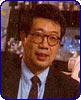 Kenneth
Fong, PhD
Kenneth
Fong, PhD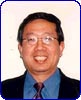 David
S. Lee, PhD
David
S. Lee, PhD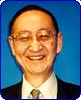 William
C.Y. Lee, PhD
William
C.Y. Lee, PhD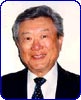 Don
F. Tang
Don
F. Tang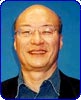 Albert
Y.C. Yu, PhD
Albert
Y.C. Yu, PhD