|
|
|
|
| Airport | Entry Regulation | Visa | Bank & Currency | Health & Safety | Tips |
|
Electricity | Postal Service | Water |
Weather | Transportation |
For National holidays, festivals, and trade shows check Calendar. |
|
|
|
|
|
|
|
|
|
|
|
** COMING SOON !! **
| Hotel Reservations | Travel Packages | |
|
|
|
 |
|
|
|
Airport
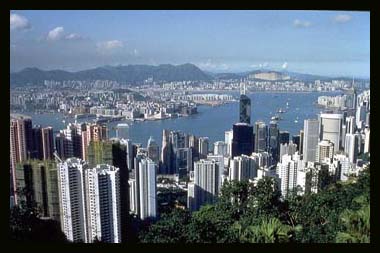
Both, modern and vibrant, Hong Kong is among the world's most captivating cities, with something for everyone here. As a
regional hub for finance, trade and tourism, Hong Kong now has a new international airport that complements this surge in activity.On Monday, July 6, 1998, the new Hong Kong International Airport
opened its doors at Chek Lap Kok, Lantau for operation, replacing the old one at Kai Tak. The opening concludes one of 10 infrastructures which has generated major change in Hong Kong's transport system. It also provides new land for use that stretches to office buildings and housing. Developments in transportation structures include 34 km of expressways and tunnels, a high-speed rail link connecting the airport with Hong Kong's urban centers, the world's longest road-rail suspension bridge and a third cross-harbour tunnel link.
As statutory government bodies, the Airport Authority and MTR corporation continue to manage the airport operations and transport railway, whilst the private sector operates individual businesses on the
island. The completion of the Hong Kong International Airport marks the conclusion of the $155.3 billion in money of the Day (MOD) terms Airport Core Programme and is Hong Kong's largest construction project
to date. back to top |
|
|
Entry Regulations
All visitors to Hong Kong must have valid travel documents, endorsed where
necessary for Hong Kong. These should be valid for at least one month beyond your planned departure from Hong Kong, and in the case of certain nationalities, at least six months.Hong Kong residents are
required to carry an identity card. To avoid any possible confusion, visitors are advised to carry at all times a similar form of photo identification, such as a passport. back to top |
|
|
|
Visa
Visitors from most countries can enter Hong Kong without a visa for periods varying from seven days to six months, depending on their
nationalities. Anyone wishing to stay longer than the visa-free period must apply for a visa before traveling to Hong Kong.For country-specific visa information Applications should be made to the
Immigration Department, 2/F, Immigration Tower, 7 Gloucester Road, Wan Chai, Hong Kong (Tel: (852) 2824 6111, Fax: (852) 2877 7711) or the nearest Chinese Consulate. When applying for a visa, it is advisable
to give at least six weeks' notice. On arrival in Hong Kong, visitors will have to satisfy immigration officers that they possess an onward or return ticket (unless they are in transit to China or Macau)
and that they have adequate funds for their stay in Hong Kong without work. (Generally, a confirmed hotel reservation, a valid international credit card and/or an appropriate amount of cash will suffice.)
Visitors are not allowed to enter employment (paid or unpaid), to establish or join any business, or to enter school as a student. Nor, except in the most unusual circumstances, are visitors allowed to
change their status after arrival. back to top |
|
|
|
Bank and Currency
Major banks are open from 9am to 4.30pm, Monday to Friday, and 9am to 12.30pm on
Saturday; they close on Sunday and public holidays. Some banks and branches are open slightly longer hours; some banking services are not available an hour before closing.There are 185 licensed banks in
Hong Kong, including more than 148 foreign banks. These have full or representative offices, predominantly in the Central financial district; in addition there are extensive networks of bank branches
throughout the territory. Automated teller machines (ATMs) can be found almost everywhere; some Hong Kong Bank "Electronic Money" machines provide 24-hour cash withdrawal (HK$) facilities for Visa
and MasterCard holders. American Express cardholders have access to Jetco ATMs and can withdraw local currency and traveler's' checks at the Express Cash ATMs in town. EASYCHANGE is the first 24-hour
automatic currency exchange service in Hong Kong. There is one located at the Wing Lung Bank on 4 Carnarvon Road, Tsim Sha Tsui, Kowloon; and another at the Wing Lung Bank at Shop 101 Convention Plaza, 1
Harbour Road, Wan Chai, Hong Kong. Legal tender is the Hong Kong dollar (HK$); there are 100 cents in a dollar. Coins, issued by the government, are bronze-coloured for 10 cents, 20 cents and 50 cents;
silver-coloured for $1, $2, and $5; and there is a new nickel-and-bronze coin for $10. Notes issued by two private banks (the Hongkong and Shanghai Bank and Standard Chartered Bank), have denominations of
$10, $20, $50, $100, $500, and $1000. The Bank of China issues all of the denominations except HK$10. Since the mid-Eighties, the value of the Hong Kong dollar has been pegged by the government at HK$7.80
to the American dollar, and consequent rates of exchange to other currencies. However, the market rate exchange to the US dollar fluctuates marginally, and banks and money changes charge commission.
Similarly, commissions are payable in hotels and major retail outlets which provide exchange facilities for their customers. As elsewhere, the rates of exchange for cash and travelers' cheques are marginally
different, and coins are not exchangeable. The display of net rates of exchange by money changers is a legal obligation -- visitors are advised to check them -- and also the amount of any additional
commission payable for the exchange of traveler's' checks, before handing over the money for exchange. Receipt notes must be issued by law, but there is no need to retain these as there are no restrictions
on currencies being brought in or taken out of Hong Kong. back to top |
|
|
|
Health and Safety
Most hotels have a medical clinic, with registered nurses. Qualified doctors are
on duty at specified hours, and on call 24-hours-a-day for emergency treatment. There are also many government and private hospitals with 24-hour emergency and out-patient departments.Hong Kong's medical
facilities are among the finest in the world, and many of the territory's registered doctors and dentists were trained or have undergone postgraduate training overseas. Pharmacists, too, are registered;
their dispensing hours are usually 9am to 6pm or 8pm. All hotels have lists of recommended medical services; alternatively, contact your consulate for assistance. Hong Kong is generally considered a very
safe city both at night and during the day. As everywhere, however, protect yourself from pickpockets and carry as little cash and as few valuables as possible; traveler's' checks and credit cards are widely
accepted. The Hong Kong Police Force (HKPF) has stations and reporting centers throughout the territory. The staff at the HKPF reporting center in Tsim Sha Tsui in Kowloon and in Central on Hong Kong
Island - at the Star Ferry Concourse, for example - are accustomed to helping visitors. back to top |
|
|
|
Tips
Most restaurants will levy a 10 per cent service charge, but will expect to be given some loose change. Restaurants that don't add a
service charge will expect a 10 per cent tip. However, the tipping is left to your discretion. Bellboys, porters, restroom attendants and taxi drivers will happily accept loose change.
back to top |
|
|
Electricity
Voltage in Hong Kong is 200 / 220 volts, so a transformer will be needed to
operate 100-volt appliances. Most major hotels provide hair dryers and other amenities. back to top |
|
|
|
Postal Service
Hong Kong's internal and international postal services are excellent. On Hong
Kong Island, the General Post Office is located near the Star Ferry Concourse and Jardine House (Hong Kong G.P.O. 8:00 a.m. - 6:00 p.m. Mon. to Fri., 8:00 a.m. - 2:00 p.m. Sat.); the Kowloon Central Post
Office is at 405 Nathan Road, between Jordan and Yau Ma Tei M.T.R. stations (Kowloon Central Post Office 9:30 a.m. - 6:00 p.m. Mon. to Fri., 9:30 a.m. - 1:00 p.m. Sat.). Postfax, Speedpost and poste restante
services are available. There are local post offices throughout the territory; all are closed on Sunday and public holidays.
Most hotels offer postal facilities for guests' letters and packages, and a
packing service. Many shops and department stores will handle packing and shipping of customers' purchases. As postal insurance usually only covers total loss, it is advisable to buy an all-risks insurance
policy for major purchases, particularly for fragile items, to cover the possibility of damage as well as loss in transit. back to top |
|
|
|
Water
The government-run water supply more than satisfies United Nations World Health Organization standards. Care is necessary only in
some rural and island areas where water is still drawn from wells. Bottled water is widely available in hotels, restaurants and convenience stores. back to top |
|
|
|
Weather
Spring
March to mid-May
Temperature: 18oC (64oF) to 27oC (80oF).
Humidity: Around 82%.
Occasional mist and rain showers
What to wear: Have sweaters and shower proof jackets ready. Summer
Late May to mid-September
Temperature: 26oC (79oF) to 33oC (91oF).
Humidity: 80% plus.
Normally sunny, but during the typhoon season (July-September) there can be heavy rain.
What to wear: Short sleeves and cotton dresses for outdoor wear on sunny days. Autumn
Late September to early December
Temperature: 18oC (64oF) to 28o(82oF).
Humidity: Around 72%.
Sunny and clear, ideal walking weather
What to wear: Light clothing for the day, and sweaters and light jackets for the evenings. Winter
Late December - February
Temperature: 14oC (57oF) to 20oC (68oF).
Humidity: Around 72%.
Sunny, bright and coolish
What to wear: Bring suits and some
warm clothing. Overcoats may be needed on a few days. back to top |
|
|
|
Transportation
Taxis: There are three taxi areas: Hong Kong Island and Kowloon (red taxis), New
Territories (green), and Lantau Island (blue). All 17,500 taxis are licensed, air-conditioned and metered, with differing flagfalls. Most are licensed to carry up to five passengers. Price tariffs are
displayed clearly inside the taxis; tunnel tolls are extra charges (and the toll for the two cross-harbor tunnels is doubled, as drivers based on Hong Kong Island or in Kowloon usually stay in their own
known territory and will return to it after a cross-harbor trip). Red taxis' minimum fare is HK$11.50 plus HK$1.00 for every 200 meters. Permitted extra charges are HK$20 for the Cross-Harbour Tunnel and the
Eastern Harbor Crossing (HK$10 is for the return journey toll); HK$5 for the Aberdeen Tunnel; HK$6 for the Lion Rock Tunnel and HK$5 for a radio call. Fares for green and blue taxis are HK$10 (plus HK$0.90
for every 200 meters) and HK$9 (plus HK$0.90 for every 200 meters), respectively.
Although many drivers understand English, visitors are advised to ask their hotel's information desk to write down their
intended destination in Chinese, or ask the hotel doorman to tell the driver. Many drivers also have the official bilingual street map at hand for reference; most can also call up their radio-service
headquarters which will usually provide translation from English to Cantonese for the driver.
The raising of a red "For Hire" sign in the front window (and illumination of a rooftop taxi sign at
night) indicates that a taxi is available. There are taxi ranks at both Star Ferry Concourses, outside hotels, near M.T.R. and K.C.R. stations, and in other places. It is best to queue at the ranks, as
traffic regulations prevent taxis from stopping to pick up or deposit passengers on restricted roads (marked with solid yellow lines on the roadside). Taxis are least available around the 4.00 p.m. end-shift
changeover period.Buses:
There are four franchised public bus services - two on Hong Kong Island, one for Kowloon and the New Territories, and one for Lantau Island. Their route maps are extensive, and include many beauty spots and tourist destinations. Fares are inexpensive, ranging from HK$1 to HK$30. Passengers pay their fares into coin boxes when boarding the buses; have small coins available, as the drivers do not provide change.
Bus services usually run from 6.00 a.m. to midnight daily, and at frequent intervals in the urban areas. There are late and overnight bus services connecting Hong Kong Island with major population
centers in Kowloon. Visitors should be advised that not all bus routes are operated with air-conditioned buses, and rush hour bus travel can be uncomfortably crowded. The better views are gained from the
no-standing room upper deck of double-decker buses. Large luggage is prohibited, as is smoking. Car Rental:
Self-drive and chauffeur-driven car-rental services are available from major hotels' transportation counters or other agencies. Few visitors consider self-drive, as the public transport network is extensive and daytime parking is difficult in urban areas. If you choose to drive, always carry your travel documents and driving license. Chauffeurdriven limousines, hired by the hour or day, are air-conditioned.
Visitors with a valid overseas driving license are permitted to drive in-Hong Kong for a maximum period of 12 months. Motor vehicles, including motor scooters, may not be hired or driven by anyone
under 18 years of age or those disqualified by a court from holding or obtaining a license. Third-party insurance is compulsory. Following British practice, Hong Kong traffic drives on the left.
Ferries: As a coastal community with 235 islands, Hong Kong naturally has extensive ferry services. Star Ferry boats shuttle across Victoria Harbour every few minutes from Central to Tsim Sha Tsui,
(6.30 a.m. to 11.30 p.m.). The service began in 1898, and the historic green-and-white ferries provide splendid views and photo opportunities during their eight-minute cross-harbour voyage. A single journey
on the upper deck costs just HK$1.50; the lower-deck fare is HK$1.20. Other Star Ferry boats connect Central with Hung Hom (7.00 a.m. - 7.20p.m.), and Wan Chai to Tsim Sha Tsui (7.30 a.m. - 11.00p.m.).
Hong Kong Ferry Company boats form a massive fleet of double- and triple-decked ferries plying an astonishing range of routes to outlying islands, New Territories towns, and across the harbour. Some
112,500 commuters use them daily, and visitors are advised to avoid rush hours (or sail in the opposite direction to the commuter flow). Weekend ferries are also usually crowded with daytrippers. One-way
fares to popular islands (Cheung Chau, Lamma, Lantau and Peng Chau) are inexpensive; from HK$6.50 on weekdays on the non-air-conditioned deck, to HK$23 at weekends on the air-conditioned deluxe decks.
Children's fares are reduced. Journeys to the four major islands take no more than one hour. Other Hong Kong Ferry Company passenger services include high-speed hoverferry routes to the New Towns of Tsuen
Wan and Tuen Mun, some Outlying Islands, and across Victoria Harbour from early morning to late afternoon from Central to Tsim Sha Tsui East. To the north of Sha Tin, the twice-daily three-hour Tolo Harbour
service (not air-conditioned) voyages through wonderful scenery and offshore islands. There are also nonair-conditioned ferries on a scenic inter-island route linking Cheung Chau, Peng Chau and two harbours
on Lantau Island, and excursion services two times every weekend and once on public holidays, from Central, via Tuen Mun, to two other harbours on Lantau Island. Sampan water-taxi services, which are
generally used by fisherfolk and villagers, are available in major fishing harbours such as Aberdeen and Cheung Chau for short harbour tours. Their equivalent in Victoria Harbour, generally used to transport
merchant seamen to and from their anchored vessels, are bigger boats called wallah wallahs. Such cross-harbour services should be used only by visitors with Cantonesespeaking companions. Other Hong Kong
Ferry Company passenger services include high-speed hoverferry routes to the New Towns of Tsuen Wan and Tuen Mun, some Outlying Islands, and across Victoria Harbour from early morning to late afternoon from
Central to Tsim Sha Tsui East. To the north of Sha Tin, the twice-daily three-hour Tolo Harbour service (not air-conditioned) voyages through wonderful scenery and offshore islands. There are also
nonair-conditioned ferries on a scenic inter-island route linking Cheung Chau, Peng Chau and two harbours on Lantau Island, and excursion services two times every weekend and once on public holidays, from
Central, via Tuen Mun, to two other harbours on Lantau Island. Sampan water-taxi services, which are generally used by fisherfolk and villagers, are available in major fishing harbours such as Aberdeen and
Cheung Chau for short harbour tours. Their equivalent in Victoria Harbour, generally used to transport merchant seamen to and from their anchored vessels, are bigger boats called wallah wallahs. Such
cross-harbour services should be used only by visitors with Cantonesespeaking companions. The 43.2-kilometre Mass Transit Railway (M.T.R.), serving major population centers on either side of
Victoria Harbour from around 6.00 a.m. to 1.00 a.m. (depending on which line you take), is a highly efficient urban transportation network, running mostly underground. A loop of three interconnecting lines
with two spurs links Central, Kowloon and Hong Kong Island's northern coastline. An interchange station at Kowloon Tong allows connection to the Kowloon-Canton Railway (K.C.R.) services. Station
announcements are made in both Cantonese and English. The M.T.R. is fast, air-conditioned, efficient and very clean (smoking, eating and drinking are prohibited). It is also quite busy during morning and
early-evening commuter hours, and should be avoided at these times. Fares are inexpensive (from HK$3.50 to HK$10), and the ticketing system is electronic, using single-value cards obtainable from ticket
machines in all station lobbies or stored-value cards (HK$70, HK$100 and HK$200) obtained from ticket-office windows. Children aged under 3 travel free; children under 12 and students pay reduced fares. Any
amount left on a stored-value card (even 10 cents) is sufficient for the last-ride bonus. Cards are valid on both the M.T.R. and K.C.R.. Bulky luggage cannot be taken onto M.T.R. trains.
The 34-kilometre Kowloon-Canton Railway (K.C.R.)
electrified railway line connects Hung Hom, near Tsim Sha Tsui East, with 12 stations in Kowloon and the New Territories (including the New Towns of Sha Tin, Tai Po, Fanling and Sheung Shui). Train compartments are air-conditioned and busy during suburban commuting hours. Stopping services run every 10 minutes or so from early morning to midnight, more frequently during peak hours, and total journey time to the last New Territories station is only about half an hour. The final stop, at Lo Wu, is in the restricted borderland and can be used only by passengers with visas to China.
There are express services from Hung Hom via Shenzhen City in the Shenzhen Special Economic Zone (S.E.Z.) to Guangzhou (Canton City), with customs and immigration clearance facilities at Hung Hom.
Onward train connections from Guangzhou to other Chinese cities - and, eventually, to Europe - can be booked. As with the M.T.R., electronic cards are used, and fares are inexpensive, ranging from HK$3 to
HK$27. There is usually at least one first-class carriage per train, for which fares are double the normal rate. Children aged under 3 travel free; children under 12 pay half fare.The Light Rail Transit (L.R.T.)
system, run by the K.C.R., is a high-speed surface system operating in the northwestern New Territories, within the New Town of Tuen Mun, and from Tuen Mun to Yuen Long. Information offices are located at its terminal stations (Yuen Long and Tuen Mun Ferry Pier) and in Tuen Mun Town Center. It is also air-conditioned, frequent and inexpensive. Fares range from HK$3 to HK$4.30 for adults and HK$1.50 to HK$2.20 for children. Children aged under 3 travel free of charge.
Rickshaws:
First designed by an American missionary living in Japan, these man-drawn, two-wheeled, two-seat vehicles are relics of a bygone era. They were introduced to Hong Kong in the 1870s, but the present generation of elderly rickshaw-pullers at the Star Ferry Concourse in Central is the last- new licenses are no longer being issued. For a ride or a photo session, negotiate the price first.
Trams: There are two tram systems.
The Peak Tram provides extraordinary harbour views during its eight-minute, 397-metre ascent of Victoria Peak. Inaugurated a century ago, and recently
fully modernized with automated and computerized two-carriage trams, the service runs every 10-15 minutes from 7.00 a.m. to midnight daily (and until 8.00 p.m. on Sunday and public holidays), from the Garden
Road terminal (just above the Hilton hotel). A free shuttle-bus service runs every 20 minutes from 9.00 a.m. to 7.00 p.m. daily, from Hong Kong Island's Star Ferry Concourse to the terminal. Tram tickets
cost HK$10 single, HK$16 return; HK$4 one way for children under 12, HK$6 return. There are three stations enroute, serving local residents, while the new Peak Galleria shopping and dining complex at the top
of the tramway is a major tourist attraction. Hong Kong Transways, a 13-kilometre street transit system, was established more than 90 years ago. It runs along Hong Kong Island's northern coast, from
Kennedy Town to Shau Kei Wan, with a side loop around Happy Valley racecourse. The double- decker trams trundle safely along their midstreet rails, providing top-deck passengers with fascinating slow-motion
overviews of Hong Kong's urban bustle, from 6.00 a.m. to 1.00 a.m.. The fare is HK$1.20 (HK$0.60 for children), no matter how many stages are taken, and paid into the driver's coin box upon alighting; have
exact change ready. back to top |
|
|
|
|
Beijing | Hong Kong
| Japan | Indonesia | Korea | |
|
|
|
|
Malaysia | Singapore
| Taiwan | Thailand | |
|
|