 Loving
The Big Apple Loving
The Big Apple
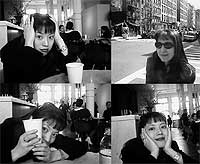
Masayo
Kawaguchi - Host of "MKNY"
By
Dennis A. Amith, AsianConnections.com
In Japan, there are not many females in the media industry
who have the opportunity to work in New York, to have a fan following
for being a radio voice actress for a popular drama show and video
game, to release their own music album, to be a disc jockey, a columnist
and to work as a broadcaster but Masayo "Masshy" Kawaguchi
is one of those rare individuals to do so.
Kawaguchi who currently resides in the Gramercy Park section
of New York City works as host and producer for the Internet show
"Masshy in New York" (aka MKNY).
MKNY is a show that spotlights on what is new and popular
in New York covering fashion, technology and other miscellaneous
topics.
Kawaguchi has been on television for numerous broadcasting
jobs and she also has worked in journalism covering stories such
as performance enhancement drugs interviewing athletes such as Mark
McGwire and Ben Johnson.
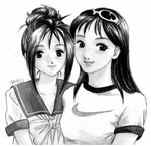
She also gained popularity for her work in the Konami video
game and drama series "Tokimeki Memorial" as character,
Ayako Katagiri.
Kawaguchi is also a talented singer in which she released
a best hits album titled, "masshy@love.net."
Dennis:
What part of Japan are you originally from?
Masshy:
I was born in the city of Fukuoka on the island of Kyushu in
the southern end of Japan. We then moved to Osaka for nine years
and came back to Fukuoka for three years. We moved to Tokyo when
I was 14 years old and lived there until I moved to New York in
1995. Because of that, I am fluent in Hakata (Fukuoka), Osaka and
Tokyo (standard) dialect.
Dennis:
What kind of atmosphere did you grow up in?
Masshy:
I was raised in a very close knit family. Both my parents were
extremely joyful type of people and very cooperative with whatever
the children want to do. We also had many different pets (rabbits,
dogs, fishes and birds). We lived in a house with a very traditional
Japanese architecture and a Zen garden. We celebrated all the holidays
in a traditional fashion. Therefore, I grew up in an environment
which the traditional Japanese culture was revered and treasured.
My father was an expert in Martial Arts since he was in college
and my mother loved to sing and draw. She used to be a teacher of
traditional Japanese paintings. Currently, she is studying Noh Theatre
Dance. My younger brother has been working for NEC since he graduated
college.
Dennis:
What fun things did you do as a child?
Masshy:
When I was a child, I used to love reading books about stars,
planets, and space travel. I used to dream of traveling around the
world. One of the things I used to love to play at home was to pretend
I was in a Las Vegas casino.
Dennis:
How did you get involved in entertainment?
Masshy:
I entered the entertainment world while I was a student at Nihon
University College of Art. I debut as a singer/songwriter after
my demo-tape was approved by a record company. When I was a sophomore
I released five singles and an album.
Dennis:
What was your major in college?
Masshy:
I was a drama major but I was also a theatre student at the
Bungakuza Actors Studio, which is one of the major theatre companies
in Japan.
Dennis:
What did you do right after you graduated from college?
Masshy:
After graduation and while I was working as a singer/songwriter,
I appeared in many music-related TV programs and starred in a popular
Japanese TV Drama called "Ninen B Gumi Senpachi Sensei"
(Note from editor: Regarded by critics as one of the most popular
dramas ever in Japan) as an English teacher. This TV drama also
produced a star named Masahiro Motoki (White Love Story, The Mystery
of Rampo and many other movies and dramas).
Dennis:
Once you started acting, did you continue to sing?
Masshy:
After three years as a singer, I decided to quit singing and
focus my career as an MC, broadcast reporter and journalist. When
I was traveling to many foreign countries as a TV reporter, I felt
that this is what I wanted to do, reporting and writing about what's
happening in the world not only in Japan! In fact, this is what
I always dreamed about in my childhood!
Dennis:
How did you return to singing?
Masshy:
Five years ago, I was chosen as a voice-over actress for "Tokimeki
Memorial" and was able to release a new CD album called "masshy@love.net"
in 1998. This experience made me rekindle the joy of singing.
 |
|
|
 |
|
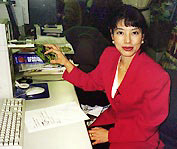
Mashy
at work
|
|
|
Dennis:
Let's talk about your album "masshy@love.net". Can you tell
us more about this album?
Masshy:
The recording was done in Kobuchizawa, a summer resort area
in central Japan. It took about 10 days. The Album is a collection
of songs from Tokimeki Memorial and several songs which I wrote
personally when I was a singer/songwriter. I must say that this
experience made me realize that singing and songwriting was still
very much an important part of my life. I enjoyed every moment of
the recording experience.
Dennis:
Let's move away from music and talk about broadcasting. Is it very
difficult for women in Japan to have a career in media?
Masshy: Its very tough. To be a reporter, announcer
and MC is the most sought after profession for Japanese women. There
is a fierce competition out there. You must understand that we are
always replaceable. There are tens of thousands of talented girls
coming out of college every year who want to break into this field.
You make one mistake and you're gone! So it is miraculous for me
to continue continue in this field for many years.
Dennis:
I'm looking at your list of accomplishments and I'm very impressed.
In your years of journalism and entertainment, in your mind what
was the shining point of your career?
Masshy:
In my mind, I'm still improving and I have not reach
the zenith yet! I hope.
Dennis:
Are you based in NY most of the time or are you in Japan most of
the
time?
Masshy:
I live in NY now. I go back to Japan about 6-10 times
each year.
Dennis:
Let's talk about your Internet show "Masshy in NY". For
our readers, can you give us a brief description of what the show
is about and what you try to accomplish with each episode?
Masshy: Here in New York, I'm trying
to create a new niche as a Japanese journalist not just by reporting
about hard news facts but about New York City culture and about
the real people who lives in the city. That is why I'm very much
interested in Internet because it is precisely the media which makes
such coverage possible. I can report and write about things which
tends to be ignored by the major media. "Masshy Kawaguchi from
NY" or "MKNY" is a program about what's new and what's
hot in New York in fashion trend, computer/internet related matters,
and other miscellaneous topics.
Dennis:
How is the show created?
Masshy:
The show consists of changing pictures taken with a digital
camera synchronized with my talk using RealPlayer 5.0. When I came
to New York in 1995, I had a job as a main broadcaster in a weekly
TV program for TV-Tokyo called "Internet Express." Believe
it or not, I had to go back to Japan every other week for 6 month
to record 2 shows! This TV program was created largely with the
help from Impress Corporation, a major computer media publisher
in Japan which became the sponsor for MKNY Internet broadcast. I
also write a monthly column for their monthly magazine called the
"Internet Magazine."
Dennis:
How long does it take to do a show?
Masshy:
It take a whole day to take pictures with the digital camera
and record my narration's. The pictures are sent to Japan by email
and the digital audio tapes by Federal Express. Both pictures and
audio is then edited by the staff at Impress Co. This process takes
about a week! Its quite laborious you know!
Dennis:
What is your favorite episode so far?
Masshy:
I like them all but I particularly like the ones which I had
to research, explore, and investigate. It is like a small adventure,
a small personal trip.
Dennis:
How are you enjoying New York compared to Tokyo?
Masshy:
I think New York is very similar. to Tokyo. I love Tokyo but
I like NY even more. It might sound strange to people living in
California or Texas but I feel like I have more personal space in
NY compared to Tokyo. I feel more comfortable here. Tokyo is so
over-crowded that it is suffocating. Take the subway for instance.
In Tokyo, people push their way into the train. In New York, people
wait for the next train. One time, I heard someone say, "Please
don't push me! I need more space!" If you say that in Tokyo,
people will just ignore you or think you're nuts. Here in NY people
respect that opinion and yield some space for you. I hate to say
this but life in Tokyo is like the movie, "Life of the Ant."
People work so hard everyday but do not get much reward for in their
personal lives. Its so hectic. Whenever I go home to Japan, I always
want to come back to New York after few days. During my 4 years
in NY, I never felt like I want to go back to Tokyo. I feel that
Osaka is more similar to New York than Tokyo. The people's attitude
is more similar. They are more relaxed.
They
can take more humor. Tokyo is to business-like. Too stiff. After
all I said about Tokyo, I must say that I do think Japanese traditional
culture is the most beautiful thing in the world and I'm proud of
it. One thing I miss about Tokyo is the food! I hate to use a clich?
but New York is a true capital of the world because of its cultural
diversity. You can get up in the morning, go to a Greek Diner for
a breakfast, shop for food at Korean Deli, eat Indian food for lunch
at the "Curry in a Hurry," go to SOHO for the hippest
fashion in the world and go to Japanese supermarket and cook food
at home. All this in a distance of one or two subway stop!
Dennis:
So, you really love living in New York over Tokyo?
Masshy:
I feel more comfortable here. Tokyo is so over-crowded that
it is suffocating. Take the subway for instance. In Tokyo, people
push their way into the train. In New York, people wait for the
next train. One time, I heard someone say, "Please don't push
me! I need more space!" If you say that in Tokyo, people will
just ignore you or think that you're nuts. Here in NY, people respect
that opinion and yield some space for you. Whenever I go home to
Japan, I always want to come back to New York after few days. During
my four years in NY, I never felt like I wanted to go back to Tokyo.
Dennis:
So, I assume that you wouldn't want to move back to Tokyo?
Masshy: After all I said about Tokyo, I must
say that I do think Japanese traditional culture is the most beautiful
thing in the world and I'm proud of it. One thing I miss about Tokyo
is the food!
Dennis:
Is it safe to do your type of show in different areas of New York?
Masshy:
Recently I heard that crime rate in New York has become much
lower than in Los Angeles or Miami. The myth about NY is no longer
true! It's all because of Mayor Guiliani. He might be too tough
in certain aspects of his policies but he is a very good mayor in
terms of crime control and reviving the economy of the city.
Dennis: What do you think about
the New Yorkers?
Masshy:
There are crazy people in New York but that's part of life in
a big city. I really love the diversity in New York. The people
are friendly. New Yorkers seem to be very genuine type of people
to me. They are not superficial. They might be crazy at times but
they are for real.
Dennis:
What does New York have that California doesn't?
Masshy:
Changing seasons and subway system (like Japan).
Dennis:
Since we are based in the West Coast (California), a lot of people
may
wonder if it's safe to do your shows in the city of NY. Do you run
into crazy people sometimes on the street while you are doing your
show?
Masshy:
I heard recently that the crime rate in New York has
become much lower than in Los Angeles or Miami. The myth about NY
is no longer true! All because of Mayor Guiliani. He might be too
tough in certain aspects of his policies but he is a very good mayor
in terms of crime control and reviving the economy of the city.
For example, the infamous Alphabet City in the Lower East Side has
become the hippest place for young New Yorkers to hang out!!! Its
very safe. There are crazy people in NY but they are all part of
a life in a big city. I love the diversity. I get along well with
those crazy people. They are friendly. New Yorkers seem to be very
genuine type of people to me. They are not superficial. They might
be crazy at times but they are for real.
Dennis:
What is the most satisfying part about being involved in journalism
and the entertainment field?
Masshy:
When something which I researched and investigated turns out
to be useful information to the general public, that is when I feel
most satisfied. As for entertainment, I feel happy when the audience
is satisfied.
Dennis: What is the most frustrating
part of being in the field?
Masshy:
Dealing with the business aspect. Since Japan is in recession
now, it is very hard to create work that is satisfying with a restricted
budget. As far as the work itself is concerned, I enjoy every aspect
of it.
Dennis:
Let's do a little word play. I ask part of the question and you
answer the rest. The first time I watched myself on television I?/span>
Masshy:
...was embarrassed and retreated to my room and watched it
by myself.
Dennis:
My favorite food is?/span>
Masshy:
Ramen noodles.
Dennis:
My most embarrassing moment was when?/span>
Masshy:
There are too many of them?/span>
Dennis:
The first time a fan went up to me I?/span>
Masshy: ...was surprised. I asked the person,
"How did you know me? Why do you want my autograph?"
Dennis:
Do you have any role models who inspire you?
Masshy:
In Japan, I have too many but the most important is my mom
and dad. When I was a child, I dreamed to be like Madame Curie.
Now I respect respect someone like Barbara Walters. A female journalist
who is at the peak of her career regardless of her age.
Dennis:
Let's talk about your involvement with the radio drama series in
Japan, Tokimeki Memorial. How did you get involved with voice acting?
Masshy:
Since I was 3 years old, I was involved with music. I knew I
would become a singer so I felt quite natural when I made my debut
during my college years. I thought it was my destiny to become a
singer/songwriter. But I soon realized how hard it was too maintain
commercial success as a professional singer. I didn't want to compromise
my idea as an artist to sell more records by making music which
I didn't like. So I decided to quit. I guess I was too stubborn.
I didnt want to walk on a rail which the record company set for
me. I thought, maybe I wasn't talented enough.
As
far as Tokimeki is concerned, I was quite familiar with voice-over
jobs since I was in college. I did many part time voice-over works
for TV commercials and radio. So it was quite easy for me to get
involved in Tokimeki. I started Tokimeki after I moved to NY. I
returned to Japan for more than 20 times for voice-recording. So
far, I have recorded about 29 songs for Tokimeki. I recorded some
of these songs in a studio in NY.
Dennis:
Is voice-acting very difficult? Also, how long does it take to do
one
drama series episode?
Masshy:
Not really. As I said before, although I'm not a professional
voice-over actress, I was quite familiar with it. Acting training
also help a lot. You just have to transform yourself into the "anime"
character. Time required for the recording depends on the episode.
Sometimes its over in several hours. Sometimes I'm in the studio
all day long. You have to record different tones of voice (happy,
sad, angry, concerned etc).
Dennis:
How many songs have you recorded for the show?
Masshy:
So far, I have recorded about 29 songs for Tokimeki. I recorded
some of these songs in a studio in NY.
Dennis:
What kind of music do you enjoy listening to? (Japanese or American)
Masshy:
I like many types of music but the most influential musician
in my life was Yumi Matsutoya (Yuming). She was my role model as
a musician. Todd Lundgren and Eric Carmen are the most influential
foreign musicians for me. I also love listening to the 70s disco/soul/funk
tunes such as "Earth, Wind, and Fire." I love dancing
to those tunes. Now I'm into music with a cyber-futuristic sound.
i.e,- Orb, AIR, etc. I like something very progressive. A sound
that no one has heard before.
|
 |
|
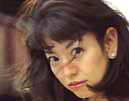
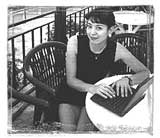
Masshy
striking a pose in Switzerland
|
|
|
Dennis:
What is your favorite movie (Japanese or American)?
Masshy:
Japanese: "Zigeunerweisen" by Seijun Suzuki;
"Ashita (Tomorrow)" by Nobuhiko Ohbayashi; Foreign: "Taxi
Driver" by Martin Scorcese and "Cinema Paradiso"
by Giuseppe Tornatore.
Dennis:
What is a typical day for you when you are working/and when you
are not working?
Masshy:
When I'm working, there is no such thing as a typical
day. Every work day is a new experience. When I'm not working, I
wake up and turn on my Macintosh computer, brew a cup of coffee,
and turn on NY1 (Channel One in NY). Check the headline news and
the temperature of the day and so on. I really don't have any routine
after that. Sometimes I go shopping for food, clothes etc. like
everyone does. Yes, of course, I so a lot of net surfing!!!
Dennis:
What goals do you hope to accomplish in the near future?
Masshy: My goal is to contribute to
the greater understanding between Americans and Japanese people.
I would like to contribute in the education of both American and
Japanese people about each other's culture and solve the misconceptions.
A bridge between the two cultures.
Dennis:
What words of advice would you give to those entering the journalism
or entertainment field, especially the Japanese students who are
majoring in mass communications?
Masshy:
I don't have anything specific technically. Because I need some
advice myself! (laughing) I'm still learning myself. The only thing
I can say is to keep chipping away, keep moving forward, be flexible
and be open minded. Don't lose your integrity! Don't be afraid to
say no!!!
Dennis:
What final words would you like to leave with fans of your work?
Masshy:
First I would like to thank you Dennis Amith for giving me
an opportunity to be interviewed. I would also like to thank everyone
who supports me. Because of the Internet, I was able to communicate
with a wonderful person like Dennis. I hope everyone who read this
interview can also visit my homepage and say hello to me. Thank
you! Ciao, Masshy :)
Thank
you to AsianConnections correspondent Dennis A. Amith. This interview
by Dennis originally appeared in Asian Pacific Review - Vol. 4,
Issue No. 4
--------------------
Back
to Article Archives by Dennis A. Amith
|