Ads used to be here |
 |
 |
 |
 |
 |
 |
 |
 |
|
Better
Luck Tomorrow, Today |
||||||||||||||||||||||||
|
||||||||||||||||||||||||
|
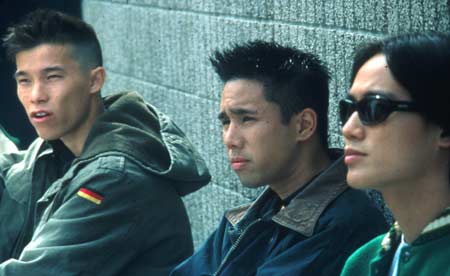
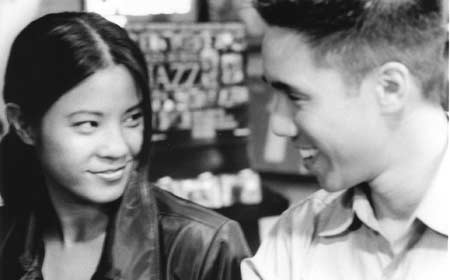
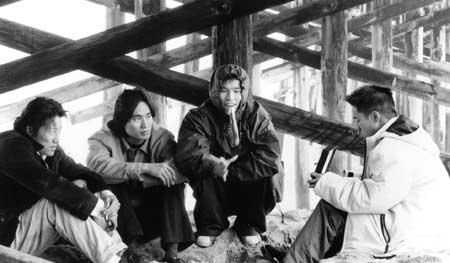
AsianConnections� Arts and Entertainment editor Lia Chang caught up with Justin Lin right after the critical make or break opening weekend of his movie Better Luck Tomorrow, the first Asian American independent film to be acquired and distributed by a studio, with the potential for a shot at true box office success. The movie, distributed by MTV Films in conjunction with Paramount Classics opened last weekend in a limited theatrical release in Los Angeles, New York, Chicago and San Francisco to enthusiastic audiences. This Friday, the film opens in 10 more cities including Seattle, Houston, Washington D.C., Boston, and Florida. Further screening locations of this film will depend on this weekend�s box office receipts.
If this past weekend�s sold-out screenings continue, Lin�s movie will become not only the first Asian American independent film to reach box office success, but also the first hit since the release of Wayne Wang�s The Joy Luck Club in 1993.It�s been a rollercoaster ride for the avid Laker fan since the day before Thanksgiving when he got the call that every filmmaker dreams of changing the course of his life. From thousands of entries, Better Luck Tomorrow, his second feature film had been selected as one of sixteen films to be shown in competition at the Sundance film festival. MTV Films has acquired the film for distribution. Lia: Congratulations! I saw the film with a packed house on opening night. The audience was about 95% Asian American. Let�s talk about your journey since Sundance and your opening weekend whirlwind. Justin: This is the same feeling I get since day one of this project. You make this huge accomplishment. You�re so proud. Then you look up and there is another mountain. This opening weekend was unbelievable. I was in New York this last weekend. Lia: What compelled you to want to take all of your money to finance Better Luck Tomorrow? Justin: Making an Asian American film is such a struggle because we can�t even make it on a level playing field. People complain about low budget films. We don�t even get to make low budget films. We only make films that are a fraction of low budget films. When I finished the BLT script and took it out, I got a great response. People were excited. But they kept on coming back to me to ask me if I could change it to a Caucasian cast, or a Latino cast, or an African American cast. If I went with an African American cast, changed the ethnicity, I could easily have gotten seven figures. At least a budget of a few million dollars to make it. I wasn�t tempted at all. Writing is so hard anyway. I didn�t want to change it for the sake of money. Many of these investors were Asian Americans asking for the changes. That�s when I first realized that film was such a clash between art and commerce. Lia: Can we address the issue of Asian American investors asking you to change the characters to Caucasian? How did that make you feel that they were Asian Americans? Did you feel like you were being betrayed by your own ethnicity? Justin: Totally! Being a person of color, a lot of times you get hit twice as hard. It bothered me at first. Then I realized that it is the reality. I could either go with the reality. Or do something different. It became a credit card movie. Sure it was a clich�, but that was the only route that I could go. To max out ten credit cards and my life savings to make this film. Once we made the film, it was the most amazing experience. Not having any money was a big struggle. The positive is that everyone comes on the project for the right reason. The actors-all they had to go by was the script and basically me. Lia: It was refreshing for me to see Asian American actors have the opportunity to play such well written, finely etched characters. The actors were seamless in their performances. Can you tell me about working with your actors?
Justin: I can definitely feel that as a filmmaker. It was great to be able to be in that environment where it was just about the script and try to make the script better. To try to understand the characters, we really got to play. We had five weeks to rehearse; it was great to work with the actors. Not really working on the script but on the characters, the relationship with their parents, with each other, with themselves. At a certain point, with every actor, at a certain point, it just clicked. It clicked over where I felt they understood the character, they knew who the character is, and everyone was on the same page. It became a true collaboration from that point. That�s one of those precious moments. Lia: What is the Sundance film festival process like? Justin: We finished the film. The next hurdle-where do we go from here? You hear that 1000-1500 films get made a year. How do you distinguish your film from everybody else? The film festival was the next route. Sundance is the top film festival. I learned how relationships are important. We didn�t have any. We submitted it blind. They only took 16 films for competition. That was the huge call. The Wednesday before Thanksgiving. I still remember. It literally changed my life. The following Monday, my phone would not stop ringing. Everybody in the industry was calling. Agents, managers, studios, publicists, lawyers. It was interesting. Once we got to Sundance, we thought okay, we made it to Sundance. We�re one of the top 16 films in competition. Then you find out only a handful of the films get picked up for distribution. So we go to Sundance. We were the small fish. Out of the 16 films, there might have been three or four that didn�t have �names�. All of the other films were studio funded, or bigger budgets and big stars. Those films were ready to go. It was really tough. We didn�t know where we stood. The great thing was I had everybody with me-crew and cast. We had the biggest crew - 30 people plastering the town. What was great was that we hadn�t really shown it to anybody. Of course, our first screening, they put it in the biggest theater -- 1300 people. After that first screening, the buzz just started. It was a great feeling. WE had the best producer�s rep with us. Even THEY didn�t know. There was no precedence. They told us straight out that it was going to be an uphill battle. �You have no names, it�s an Asian American cast, and studios are going to shy away from that because they don�t know what to do with a film like this.� So we already had it in the back of our minds that we were going to self distribute. Take it from town to town. That was the reality for us. Lia: You did Shopping for Fangs so you had experience with the film festival circuit. Justin: Shopping for Fangs was amazing. I learned everything from writing to directing from that. So I had my bearings. This was to the next level. It was so intense. To the point where you walk outside � everybody is just hounding you. You can�t even walk down the street. Lia: Since you never had that experience before, were you overwhelmed?
Justin: Definitely overwhelming and a lot of anxiety. You just want to find a good home for the film. You don�t even know if people are talking to you because they just want to make it, to cover themselves. Not necessarily because they truly believe in you or your project. I�m a huge Laker fan. When you are a Laker fan, you actually can�t afford to see the game live - it�s too expensive. After Sundance, every studio and agent - they were wooing me. I went to every Laker game. I got closer and closer to the courtside. We were fortunate. MTV films came forward and there were two other companies that wanted to acquire it. It became such a great position to be in. It almost became us sitting down and interviewing them. Clearly MTV Films was the best choice. They got the film. They got the message. They want to bring a film like BLT to their audience. They know how to make films that make tons of money. It was nice to have that meeting and to get a feel that they were going to give me final cut. That was one of my big things. I wanted to make sure I was going to have final cut. That was huge. Once we got acquired, we thought -- we made it. But NO! I made an effort to really sit in and understand how the business worked. I�d heard about how Asian American films hadn�t made it. I didn�t know exactly why. I went and was really very aggressive with meeting with everybody I could meet just to learn. So I could share my experience. So I could figure out how if the next Asian American film or if this one creates an opportunity, how we can best benefit from it. I learned a lot.
I learned that going to film school is great but teaching you how to make a film is only a fraction of the whole journey. I learned that Asian Americans do have the presence to carve their own piece of the pie. I was in this meeting where I was shown a pie chart of all moviegoers. And African Americans took up almost half the pie. A smaller piece of the pie was Latino. The rest was Caucasian. I remembered asking where are the Asian Americans in the pie. They said, �We know Asian Americans pump a lot of money into the economy and they buy a lot of tickets but their spending patterns are the same as middle class white people. We consider them white people. I thought that was ridiculous. You�ve never had an Asian American film distributed so how can you know that they can carve their own piece of the pie. You never had the product for them to show support. It was crazy. Right away I felt, it goes full circle. As a filmmaker, you can make the best film you can. If you are fortunate enough, you make the film you want to make. At the end of the day, it is up to the viewer, for the viewers to say -- instead of a talking Kangaroo we want to watch three-dimensional Asian American characters. Once that switch is made, then you carve your own piece of the pie. Then the studios will say, there is a piece of the pie that we need satisfied. Let�s start green lighting Asian American projects. It doesn�t have to be a huge slice of the pie. I started doing numbers. I started finding out all these numbers. There are about 14-15 million Asian Americans in the North American territory. I wanted to see how this was going to work.
I know how rare this is. Having to sit through all the battles - a lot of them I can�t share with you because they are battles. I get up everyday and I feel like I�m getting punched. I�m ready for ten fights, every day when I wake up. I decided that if I am going to do this, I am going to learn something about it. With 14, 15 million, if 10% showed up to support the film, that�s enough for them to green light a decent budget film with distribution attached. It�s that simple. And with any crossover appeal, it becomes a hit. It�s actually not asking for a lot. They�ve never had the data. That�s what has been the problem. I thought now I know how the game is run. I was excited. So I said let�s go out there, let�s go into theaters. They said -- you are a small independent film still so we are going to have to platform release you. I didn�t know what that meant. I�d heard about it before. That is the hypocrisy of distribution. The way the studios work. They know how to make mainstream films with big stars, put them in 3000 screens and the per screen average can be really low but they have 3000 screens. They can make millions of dollars in one weekend. It�s a business of volume. They�ll spend tens of millions on billboards and commercials and everything. For all independent films that are going through platform release, they are only going to put you into ten theaters to begin with. They are not going to put any money into prints and advertising but they expect you to do five times the business of a regular Hollywood film. If you can do that you prove to live another a week. Then they will expand. So I was thinking - what now? BLT is this film with no big stars, and no money is being spent on billboards or awareness. What can you do? It was interesting. It became very empowering. I talked to the BLT crew.
I suggested we go back to our original plan. Let�s go back and treat it as if we have the opportunity to be in theaters. Let�s go out and talk to as many people as we can and share with people everything we have learned. It is up to them if they want to show up. For the last six to eight weeks we�ve been going around the country and talking to everybody that will even talk to us. Part of it is about carving that piece of pie. It�s about proving that a film like this, people will want to see. Finally we are hitting the first weekend. This film has gotten major critical support, which is very important for a small film. At the same time, it seems to have caught on. This is not a feel good movie but people are smart enough to get the message. It seems that people are telling others to go see it. The numbers came in. This last weekend. We are the number one film per screen average. I got the call. The Monday morning call. They said great, you blew Anger Management by more then doubling their per screen average. Next weekend we are going to open up in ten more theaters. This is the next step. We�re almost there. Here is the truth. We are one weekend away. We are on the cusp of something. The truth is that it is going to be a challenge next weekend. It not only is going to be in L.A., New York, San Francisco, Chicago, but it is going to open up in Seattle, Houston, D.C. Boston, and Florida. We have to sustain this momentum. We cannot lose this momentum. I�m trying to figure a way. If we can sustain it, I�ve already gotten word from them. They are so excited. It was such a big opening. This is the biggest per screen average opening for MTV Films or the studio ever. We�ve already done something. The thing is, if they say well, great, it was amazing but it might be an anomaly. You�ve got to prove yourself again with a smaller market. The great thing is that instead of proving it for six weeks, I talked to them. The studio told me that if you blow it out next weekend, maintain the momentum, we�re going out full wide release by the 25th of April. That is the dream. We cannot survive; we cannot say let�s play in ten theaters and average $30,000 for 20 weeks. That�s unfair. That�s not going to work. It is about volume. We want to get into the game of volume. Lia: Will it play in Hawaii? Justin: On the 25th of April. It will be interesting to see how it plays in Hawaii. Their identity is so different from the mainland Asian American community. I like going there and feeling like the majority for a week.
Again, it�s getting the word out. I feel like I�m only one person, the crew - we only have like ten of us. We�re all in different cities right now trying to spread the word. We�re missing certain cities. Unfortunately there is a lot of undue pressure put on this film. I was getting calls from other studios on Saturday while they were tracking the movie. They couldn�t figure out why by Friday night the numbers came in and it was huge. They couldn�t figure it out. I was talking to studio people all Saturday. They were baffled. The viewers. I am inspired by some of these kids who are at Irvine, Berkeley who are mobilizing thousands of people. That is just great. Growing up I was always suspect of the word community, because I felt like it is a word that we slap on because we are the same community. You are Asian American; I�m Asian American - we have to be community. I never thought that was true, I don�t think that was fair. This last weekend, I can tell you for the first time I really felt like there is community because we are sharing something together. We�re sharing this experience. Going to these screenings is amazing. What�s great is hearing other studios. They have the breakdown. They are saying about 60% that showed up were Asian American. These are data that they are starting to track. If we can sustain it. This film hopefully will succeed and we can get up to the volume. What I would love to see is that a big piece of the pie is Asian American. This is the first time that they are going to start tracking to see if the Asian American piece of the pie truly exists." Lia: What is the significance of your title Better Luck Tomorrow? Why did you want to make this film?
Justin: I wanted to find a title that embodied the narrative and the exploration of the film. The term �better luck tomorrow�. We hear it -- people use it. That saying has to do with what�s happening in the present, something that has happened. It also has a connotation of the future. It is in the same scope of the film itself, narratively. I�m hoping what people are going to walk away with is really asking two questions. The first question is � wow I know these kids, maybe I was one of these kids, how did they end where they end up? The second thing is -- well I know the credits are rolling and the movie is over but I know their lives are going to continue. What will they have to deal with? What issues do they have to deal with? What consequences do they have? I feel if those two questions are asked, I feel like I�ve done my job. Those two questions are a bit outside of that narrative so I wanted a title that really reflects that. Of course, the joke is that a lot of the time you see Asian or Asian American faces - you see the John Woo�s, A Better Tomorrow. Lia: What are your thoughts on identity politics? Justin: It�s been very interesting to me. It�s healthy. I think it is great even though it is exhausting. I hope that as a society we can move on and as a community we can move forward. We are a society that likes to label things. It�s easy for us to say - good, bad, evil-doer, whatever. It�s easy for us to slap something on. That�s part of why I really want to make this film. I work with a lot with youth. I know a lot of these incidents of teen violence when it happens. It is easy for us to superficially label them as bad kids, bad parenting. I work with these kids. I�m sure they are not bad kids. They are kids that just make bad decisions. They are just human beings. That is the impetus of the project. That�s why I wanted to make the film.
I do feel like a lot of time when it comes to the politics of identity - people misconstrue what �positive� means. A journalist was telling me that Denzel Washington was getting flack for playing the cop in Training Day from African Americans. I think that we can�t label positive as something that is noble or flawless. In a way that is very one dimensional also. Believe me, I�ve been in all these test screenings for the movie. We�re so conditioned by certain words in society. Being positive for me is to be able to explore the grays, to explore three-dimensional characters that have flaws. Whether it is small or it is huge. I think that is positive. I think the only way this film will be negative is if I didn�t do my job and I presented six one-dimensional stereotypical caricatures. That�s led to some really interesting discourse. In the last year we have been able to go to screenings and talk to people afterwards in the Q & A. That�s been very healthy. I don�t know. I still think we are not over that yet. A lot of it also is this whole model minority myth. In a way we box ourselves in as a community. With a lot of people, their argument is that there is so little representation of Asian Americans, so when we have the chance, we should make them as good model citizens. For me, why would we want to do that? It�s boring. I want to see people. What�s great is when I go to a screening in Wisconsin, and a 57-year-old white guy comes up to me and tells me he can relate to my characters. That�s good. What he is saying is that there is a universal appeal. He can relate to a certain experience. Of course he doesn�t know what it is like to be Asian American, but he does know how it is to have a sense of alienation and wanting to belong.
Lia: What was your own personal experience like in high school? Justin: When I was growing up, I could relate to Goodfellas, Schindler�s List. The one thing I could not relate to is Asian or Asian Americans on screen. I was neither Bruce Lee nor Long Duk Dong. But I can relate to all of the other characters because they are fully developed human beings. I feel like cinema is soooo behind the times. We are so conditioned. Every time we see an Asian face, you have to explain why they have to be there. Every time you see a Native American face, something spiritual is going to happen. We need to go beyond that. It�s behind the times. We need to move on. I also know that no one else is going to do it. I just don�t see it. That is what independent cinema is about. It�s to say, �Okay I might go into six figure debt but I�m going to try something here, I want this perspective. I want people to see these human beings.� Lia: What kind of work were you doing with the youth groups in Santa Rosa? Justin: Coaching a lot of basketball and teaching youth how to make community documentaries. It was very hands on both in sports and media. I worked with kids from working class to upper middle class. Some of them were Asian Americans. It was interesting. They have a very different mentality. I literally was searching for identity. Today�s youth seems to be shopping for identity. This all influenced my decision to make BLT. The mentality was so different and it was something I wanted to explore. Lia: What do your parents do for a living?
Justin: They have a mom and pop fish and chips shop in Anaheim. It�s been really weird actually. I just realized a few days ago -this year is really weird because traditionally regardless of whatever I was doing in my life I have to go back and help them from Ash Wednesday to Good Friday because that is the only time they make money when the Catholics can�t eat meat. I can�t go back because I am going to be in San Francisco this Friday for a screening. I haven�t been able to help them at all. I feel bad about it. As a filmmaker it�s been interesting because when I was working next to my parents as a little kid, I was able to sit there and observe situations. Obviously, there are obvious racial slur incidents. Those are very easy to spot. But it is the subtle things. I don�t think I would have caught on if I weren�t a person of color. It helped me to be a better observer. It helps me in my filmmaking. It�s a fine delicate balance. I believe it�s very easy for you to complain and make excuses. I�ve learned that you can do that, or you can learn the reality. Learn the game and you can deal with it appropriately. Even within the community we tend to accept things at status quo. Whether it�s even how people perceive us. Let�s try to push things. It takes more effort but it�s healthier. Lia: Film is such a powerful medium. What inspires you tell the kind of stories that you do? Justin: When I saw Spike Lee�s Do the Right Thing -- it blew me away. That�s when I saw how powerful the medium of film is. It stayed with me for two weeks. I remember when that trash can came through the window because I grew up in a mom and pop shop - it got me so angry. For days after it stayed with me. I realized - it�s not just about the trash can. There�s more to it - there�s a history, a community, relationships. I think it is a most powerful medium. Lia: Who are the other filmmakers that you like? Justin: Robert Altman, Stanley Kubrik, Kurosawa, and Terrence Malick. Filmmakers who try to think things through and use formal elements to help them tell a story. Lia: How does it feel to have realized one of your passions - the success of Better Luck Tomorrow? Justin: I want to be a better writer, a better filmmaker. That�s got to be the challenge for me. I hate writing. I love collaboration, but writing for me is the biggest challenge. Now it�s become my favorite because it is a challenge. I work on the characters and work with the actors. I�m looking forward to the next opportunity. In the film, the visual style - that�s the cherry on the top of the sundae. That�s the easiest thing to do. The hardest is to be able to work on the characters and the second thing is to work with the actors. It never ends. Lia: When did you decide to become a filmmaker? Justin: I grew up in suburbia where I only saw crappy formulaic Hollywood films. It wasn�t until I saw Tucker and Do The Right Thing. These two movies changed me. Honestly, I got lucky. I got into UCLA film school. I don�t know how I got in but I applied. I turned in my essay and my scripts. I got in. Even when I got in I wasn�t sure about being a filmmaker until I made my first film. Lia: What was your first film?
Justin: I remember when I made my first film, Soybean Milk. The film is about this recent immigrant living in Chinatown struggling for identity and finding where his place is in this new America. But it is inside this kind of fabricated China. In the end, he finds his place. He becomes this sort of Buddha for tourists to take pictures of. It was ten minutes long, non-sync. Cost me 4,000 dollars. I had to work three jobs to pay that off. It almost killed me but I got addicted. Lia: How old were you? Justin: It was junior year so I was 20 or 21. That�s when I realized. I�m a big sports guy. I love sports. I love team sports like basketball. Filmmaking is like basketball to the next level. It still requires you to be a team player. But you have to be a coach/point guard. Be able to communicate. Learn to communicate and all these things. All the challenges of learning. The process itself is addicting. Lia: What�s next on your docket? Justin: I�ve been very fortunate. I�ve signed a couple of studio deals. I�m not quite sure what that means. I�m learning how that process works. If we talk six months from now, I�m sure I�ll have a better answer for that. I�m also working on some independent projects. I�m lucky to have a small production company, Trailing Johnson Productions, with a staff. We�re looking for material. I�m looking forward to producing and supporting other filmmakers like Quentin Lee who I made Shopping for Fangs with. I think he is a brilliant filmmaker. We�re looking to produce one of his films this coming year. It�s great. It�s all about the moment. BLT was the same before and after Sundance. Somehow Sundance got it rolling. Just as much as that�s rolling, I want to grow as a filmmaker. At the same time I can help other filmmakers I believe in. I want be able to be there. I know it is that relationship. It�s a powerful game of relationships. Lia: Care to address the issue of the lack of good available roles for Asian American actors? Justin: This question never came up until we had this screening a month ago at Harvard. This girl asked if I could ever envision an Asian American actor in a leading role, in a regular Hollywood film. I didn�t even flinch. I thought, of course. It�s not even that. It�s never been a question of talent. I know first hand. I�ve worked with these actors. They�re brilliant. They take adjustments. It�s great. It�s always been a question of opportunity.
And the fact that if you look at it -- it�s like sports too. No one is going to give you that chance unless you go and earn it. That�s the reality of it. I think the lack of roles have been that Asian American filmmakers haven�t been on a level playing field. So how do we get to that level playing field? It�s about making the films and not compromising. Finding the audience for a piece of the pie so we can create more opportunities. Then maybe five years down the road, we�ll see a romantic comedy with Asian Americans. We�ll see other films with different types of perspectives. It�s going to be a long battle. I know it�s a tough battle because BLT is not the first independent Asian American film. We�ve been doing it for the last 25-30 years. We�ve been trying. I know how rare this is. I do know that if BLT can blow it out - we are literally two weeks away from seeing where our futures lie. Everything is interconnected. If BLT succeeds or is deemed successful by a studio, we�re going to have other opportunities for other Asian American films. By having those, then we�ll have roles for other Asian American actors. Roger is in New York. Parry is in New York. Sung is in San Francisco. We understand now that we�re all connected. A lot of times this is such an insecure medium. That was the one thing that I learned really quickly. When people are insecure, they tend to their negative energy. This is the one where everyone is now seeing it. It�s not a competition between me and another Asian American filmmaker. We�re all in the same boat. If this succeeds. It�s a proven
model with African American cinema in the mid-80�s. They were saying
the same thing. When Spike Lee broke through, every studio was struggling
to find another Spike Lee. It�s possible. It has to be done by us.
In a way, that�s more appropriate anyway. You need to go through
a struggle. You need to fight for it. You get that opportunity.
You try to make more opportunities.
|
||||||||||||||||||||||||
|
|




 AsianConnections
Arts & Entertainment editor Lia Chang appears as Nurse Lia on As
The World Turns and One Life to Live. Based in New York, she works
as an actor, a photographer, a multi-media journalist and designs
greeting cards. Contact Lia at
AsianConnections
Arts & Entertainment editor Lia Chang appears as Nurse Lia on As
The World Turns and One Life to Live. Based in New York, she works
as an actor, a photographer, a multi-media journalist and designs
greeting cards. Contact Lia at  |
|||
|
 |
|
|
| | About Us | Disclaimers and Legal Information | Advertise With Us | We welcome your comments. Send e-mail to us at info@asianconnections.com Copyright ©1999-2002 AsianConnections.com |