Ads used to be here |
 |
 |
 |
 |
 |
 |
 |
 |
|
Jim
Ferguson Interviews
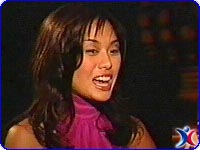
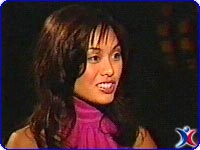
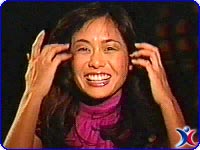
Marie Matiko of "The Art of War" |
|||
|
|||
|
Marie Matiko: Yeah, it was a military handbook that was used for thousands of years by General Sun Tzu or some people say Lao Tzu, and people have used it through the years, [even read by] Napoleon. It's a big business in Asia, sort of a bible for how to be really aggressive with your business. Jim: And the film does too, with manipulation. How to manipulate, how to control. A handbook for generals.
Matiko: Yeah, and really the point is to defeat your enemy without fighting. So how can we do that, right? So we create perception or we manipulate the perception or maybe come from one side or come from up front. We never know. Jim: Now your character in "The Art of War," Julia, is an interpreter for the United Nations, and she gets involved in some international intrigue, which is I think very realistic when you look at all the wheeling and dealings with China in trade, wouldn't you agree? The concept is real. Matiko: I think the concept is very real in that sometimes things leak out, and I'm like wow, for sure the ones that we hear are one in a dozen. Jim: Right. And then she gets involved, your character, with a UN agent, Neil Shaw, played by Wesley Snipes, and that's when it gets interesting. How does that happen? Matiko: Right! What happens is that Wesley and I are at the same celebration, a celebration of China opening to the world, and during the celebration there is an assassination, the conspiracy, part of the conspiracy. And because I heard the gunshots and I'm running to the translation booth, I see that somebody else has run out of the room and Wesley Snipes following that person, and I get investigated. And I get brought to the police station and I say, no, there's somebody else in the room, it's not him. And Wesley sees this, Wesley has this escape, I'm not going to get too much into it, but he sees that in the newspaper that I say he's innocent. He kidnaps me, and he has me translate something that he has on a tape. And gradually I learn to trust him, because every time I try to go somewhere I'm about to get killed, someone's trying to kill me. I then become his hands and eyes into the world. Jim: And then the chase begins.
Jim: Were you surprised at Wesley's skills in the martial arts? Matiko: No actually, you know, I had seen his work obviously in other films, and I had read about him and had seen him in interviews and stuff, and I actually wasn't surprised at how skilled he was. And when I talked to him, it didn't seem like he was somebody who took something very casually, like when he approached something, he was really passionate about it and would really dig into it. Jim: Of course, he did a TNT special on a tribute to the masters of martial arts. Matiko: Yeah, I though that was wonderful! Jim: One last question about your character. She was torn between two cultures, and I liked the way you did that. She was actually more New York than Asian. Matiko: Well, she was somebody who's like that on the exterior, and not exterior meaning superficially, but she was in America for a very few years and just loved what it had to offer. It offered individuality, the celebration of uniqueness, freedom, to say whatever you wanted to say, and she said whatever she wanted to say, and it's really similar to me. But then inside she really understood, in terms of the philosophy, to understand what is going on. Jim: And she explains that to her girlfriend. She didn't understand her, that you have to leave a country that suppresses that individualism. Jim: I think that you can become a role model for young Asian actresses. There are not many that get this opportunity, and you are certainly taking advantage of it, and I think portraying it, I can tell from this interview, that you could be a wonderful role model for other actresses. Matiko: That's very kind of you. Yeah, I don't know if I set out to be a role model, but I definitely set out to do roles that we haven't seen before traditionally. Because I feel Hollywood in the past has definitely seen roles that we have seen before, you know, like how Asians first came here... So, what am I? I'm a Californian. Jim: UCLA girl! Matiko: Yeah, I'm a Bruin! And I am certainly a combination of the East and West. And so what a wonderful opportunity, and I feel that this film is very groundbreaking in that we've never seen this combination of strength and heart together. Jim: It's really refreshing, I really mean that. Tell us about Vivace. Matiko: I created a school where all my kids are mostly Asian Americans. And I just created a place where kids can be creative and be artistically free and celebrate who they are. And my other staff members are people from "Miss Saigon," the Broadway show, and also my partners from the TV show "Chicago Hope." So I also feel like we are good role models for them to actually see it, I think it is a really good thing. Jim: That's right here in Los Angeles. Matiko: It's in Carson, just 45 minutes south of here. Jim: You have to be thrilled with it. Matiko: I love it! It's the greatest. Jim: Does anyone ever tell you that you are a giver, that you love to give back?
Jim: What can I say except you have to go see "The Art of War" and watch this beautiful lady's performance, and you'll have a great time. Thank you so much. Matiko: Thank you. |
|||
| AsianConnections wishes to thank Jim Ferguson and Marie Matiko for this interview. |





 Matiko:
  |
|||
|
 |
|
|
| | About Us | Disclaimers and Legal Information | Advertise With Us | We welcome your comments. Send e-mail to us at info@asianconnections.com Copyright ©1999-2002 AsianConnections.com |