Ads used to be here |
 |
 |
 |
 |
 |
 |
 |
 |
|
'Twixt
Teen and Michael Jackson |
|||
|
��Twixt�? What�s THAT mean? The word was part of the title of the best-selling book back in the late Fifties by pop star Pat Boone. It�s short for �betwixt,� as in, �betwixt and between.� It�s one of Dianne, my wife�s favorite phrases�especially at restaurants. She�ll tell the waiter, �These two entrees both sound good. I�m betwixt and between.� Anyway, Pat Boone�s book was ��Twixt Teen and Twenty,� and offered advice to teenagers. I�m thinking of Pat because I just interviewed him in front of a gymful of high school students at Campbell Hall in Los Angeles. (The assembly, part of the school�s focus on diversity, was produced by Dianne�s sister, Eileen Powers, an administrator.) Pat, who is almost 70 but looks nowhere near that age, had a lot to say to teens back in the Fifties and Sixties, when he was a bigger pop star than anybody, except Elvis. Pat had almost 40 Top 40 hits, including �April Love,� �Love Letters in the Sand,� �Ain�t That a Shame,� �Tutti Frutti,� and �Moody River.� In a month dominated by the fear of war and the disturbing visage of Michael Jackson on TV whenever some reality show wasn�t on, it was good to spend some time with a true role model.
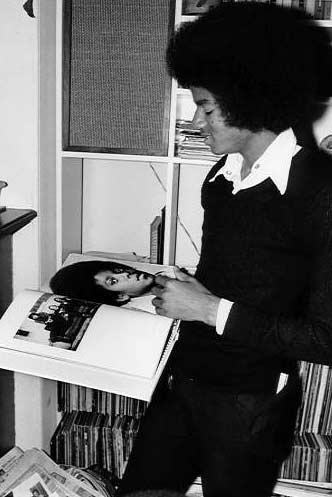
For many, Pat was too squeaky-clean back in the day. He was the �safe alternative� to the hip-swinging Elvis. A devout Christian, Pat was (and remains) a good family man. His idea of wild fashions was to wear white buck shoes. He was wearing a pair at Campbell Hall, where he good-naturedly �fessed up to having been opposed to the concept of dancing when he first emerged on the pop scene, and to wanting to change the line, �Ain�t that a shame� to �isn�t that a shame.� Squaresville. But look at what�s happened all around him, over the five decades of rock and roll. Look at Michael Jackson. I�m just as sick of hearing and talking about him as you must be. Thing is, I interviewed Michael, along with his brothers, back when he himself was �twixt teen and twenty. Twice, in fact. First when the Jackson 5 were the hottest thing in the pop world, in 1971, when little Michael was 13. Then, five years later, we met up again, at Dianne and my flat in San Francisco, for a TV interview.
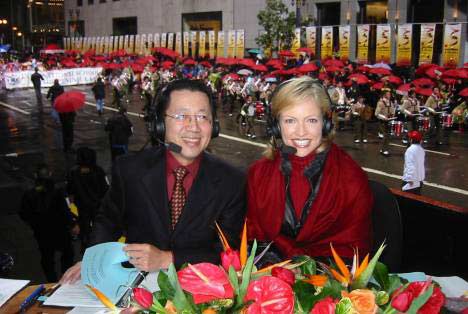
So when ABC broadcast the British documentary, Living With Michael Jackson, and, as Pat Boone might put it, all heck broke out, I was asked to go on TV myself and ruminate about this pop idol-turned-freak show. I saw the documentary, and, more than anything else, I felt sad. Here was a performer with genius in his bones. At 11, when he first burst into public view, he was an accomplished dancer, a tiny James Brown, and a super seller of songs, from bubblegum pop to down home blues. He was startlingly good. He was also painfully shy. It turns out, if you believe Michael, that he was beaten by his father into becoming that good; that he was kept from having anything near a normal life; that he�s still trying to enjoy a childhood he never had. And so, just as his father (Joseph, himself a musician) stunted his childhood, Michael now chooses to believe that he can be a child forever. His behavior, so bizarre to so many, is rooted in that fact that he was never allowed to be normal. How can one expect him to be normal now, or ever? The thing is, most child stars do work out a balance between celebrity and normalcy. Many pop stars, ranging from the clean-cut Pat Boone to wilder guys like, say, Mick Jagger, were already young adults when they became famous (Boone was 21 and already married; still is), and they�ve weathered pretty gracefully. Michael? He�s still moonwalking, backwards and forwards, precariously �twixt and between. Happy New Year, Again February, of course, was also the month for the Lunar New Year, and, for the seventh time, I co-hosted the broadcast in San Francisco of the Chinese New Year Parade on KTVU with news anchor Julie Haener. It was our third time together, and we were charmed, by good weather for the first half of the two-hour broadcast, despite week-long warnings about a storm. Rain did arrive, and thousands of firecrackers went unlit. But, across the way from us, hundreds of bright red umbrellas blossomed and only added to the color. Behind the scenes, Julie and I, as always, fended with last-second changes in the order of parade units, flipping wildly to find script pages while adlibbing, then reading the copy as casual as could be. As Jon Lovitz would say, �ACT-ing!�
It�s the year of the Ram (Julie�s year), said to be a time for harmony, compassion and peace. One can only hope. Besides the parade and the interview with Pat Boone, I also spoke at California State University in Hayward, a town where I did a bit of growing up (related link), and oversaw the recording session for the CD by Larry Ching, the former star vocalist at the Forbidden City nightclub in San Francisco back in the Forties, when even Pat Boone was just a tyke. It's Larry's first recording session since - well, the Forties. I'll let you know how it all turns out. But I'm feeling good about this. Both Larry and I were born in Monkey years. If we can find a Monkees song to mix into the American standards he's cutting, we'll have a hit, for sure. |
|||
| For more insights by Ben, visit his official website at www.benfongtorres.com |
 AsianConnections
is proud to present the adventures of
AsianConnections
is proud to present the adventures of 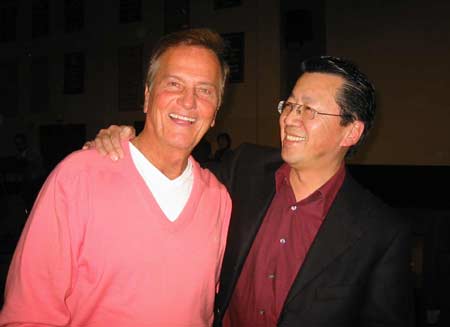
 |
|||
|
 |
|
|
| | About Us | Disclaimers and Legal Information | Advertise With Us | We welcome your comments. Send e-mail to us at info@asianconnections.com Copyright ©1999-2002 AsianConnections.com |