Ads used to be here |
 |
 |
 |
 |
 |
 |
 |
 |
|
Bruce
Springsteen: He's Still the Boss |
||
|
For a moment there, I thought Bruce Springsteen had died. Back at my home office after a lunch in San Francisco, I had messages from a TV network and a local station, wanting to interview me about the Boss. That's usually a bad sign. Previously, I've been called to weigh in on the deaths of George Harrison, John Lennon, John Entwistle, Waylon Jennings, Bill Graham, John Belushi � you get the idea. A pop figure dies; my phone starts ringing.
But no. They wanted to talk about Bruce because he'd just released a new CD, The Rising, and it was getting the royal media treatment. The cover of Time. A five-star review in Rolling Stone, which offered "the gospel according to Bruce." A live mini-concert on the Today show, broadcast from his troubled but fabled hometown, Asbury Park, New Jersey. This is the way it is these days with acts from the Baby Boomer generation. Because boomers now run the controls at media outlets, stories that were sniffed at years ago are now Page One: McCartney weds; the Who plows on, and, of course, anything Elvis. But Springsteen does give good hype. His recording truly is significant, inspired, as it is, mostly by September 11 [and can we PLEASE stop calling it "9-1-1," as someone on CNBC just did? Isn't this tragedy worthy of more than a shortcut nickname? I've come to accept "9/11," but barely. I mean, have some respect!]. And besides being one of the best songwriters ever to come along, he's one of our most engaging performers. Plus, The Rising marks the E Street Band's first time in the studio with the Boss since about a million years ago, it seems. So I go to a studio downtown and fix my gaze on a lone camera and am suddenly live with Brian Williams, the Tom-Brokaw-heir-apparent, on his news show on CNBC. He introduces me as "the best-known byline in the history of Rolling Stone." I love that guy. Meantime, somewhere in New York City, Joe Levy, the music editor of Rolling Stone, is staring into another camera, and we take turns pontificating about What It All Means. Early the next morning, I'm at the foot of Market Street in San Francisco for Mornings on 2 on KTVU, the station for which I've co-anchored the Chinese New Year broadcast six times, which means you don't easily turn down an invitation, even for 7:30 in the ayem. I sit with roving correspondent (and comedian) Mark Pitta and fake my way through another session of Bruce talk. I did OK -- or so I'm told by actual viewers. But these things are so tightly timed -- six or eight minutes in search of soundbites - that I didn't have time to get in a couple of bits. They have little to do with The Rising, but I still would've liked to have squeezed in one or more of the following: In 1973, before Springsteen exploded with Born to Run and got onto the covers of Time and Newsweek the same week (that was in '75), Rolling Stone, where I was music editor, ran its first article on him. He's issued his first album, Greetings From Asbury Park, to little acclaim, and he was, as he still appears to be, unassuming and self-deprecating, saying he thought he was simply the latest in Columbia Records' policy of signing up a "genius of the month." He was actually scouted and signed by the legendary John Hammond, Sr., who'd previously brought Bob Dylan to the label. Bruce recalled the first song he ever sang for Hammond: "It's Hard to Be a Saint in New York City." In 1975, when he was just about to break big, Dianne, my wife, and I saw him and the E Street Band at the Berkeley Community Theater. It was a powerhouse performance, the whole Wall-of-Sound bit, and the guys seemed unable to leave the stage. It was like they were Delbert McClinton or something, playing a blues joint. But one of my greatest memories was of several rows of empty seats. His new album, Born to Run, would go on to sell 15 million copies, but this was early, and a lot of people missed out on one great concert. The next year, he was back in town for a sold-out concert at a much larger facility. One afternoon, Dianne was shopping at Macy's. In the cashier's line in the lingerie department, she spotted a young man slumped against a wall. It was Bruce. She gave him a look, indicating, "It's you, isn't it?" He gave her a nod and a shrug, as if to say, yeah. I'm waiting. One last bit. If memory serves, I'm the guy who blew it for Rolling Stone on having Springsteen on the cover in a timely, if not newsweekly manner. When I heard about the Newsweek-Time juggernaut, I strongly voted against us doing the same thing. By then, we'd already done several articles and reviews. Why should we join those Establishment magazines just now discovering him? And so we held back. These days, if I'd suggested such a thing, I'd be out on the street, looking for work as an intern for Behind the Music. SPEAKING OF WHICH: After I left Rolling Stone in the early 80s, I wrote several articles for Parade magazine. Now, 20 years later, I'm back. After a casual visit to the magazine's offices in New York in May, I got a couple of assignments. Tough work, too. My first interview is with Sheryl Crow. I'll let you know how it goes.
|
||
| For more insights by Ben, visit his official website at www.benfongtorres.com |
 AsianConnections
is proud to present the adventures of
AsianConnections
is proud to present the adventures of 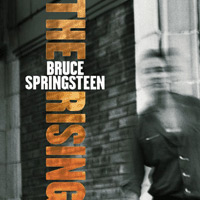
 |
|||
|
 |
|
|
| | About Us | Disclaimers and Legal Information | Advertise With Us | We welcome your comments. Send e-mail to us at info@asianconnections.com Copyright ©1999-2002 AsianConnections.com |